What Is Diffuse Midline Glioma?
Diffuse midline glioma (DMG) is an aggressive brain tumor that grows in the midline structures of the central nervous system. These include the pons (the lower brainstem), the thalamus deep inside the brain, and the cervical spinal cord. The most common form, diffuse intrinsic pontine glioma (DIPG), starts in the pons and accounts for most DMG cases.
DMG is primarily a disease of childhood. Most children are diagnosed between ages 3 and 10. The tumor spreads through surrounding tissue in a diffuse pattern, which is why surgery is almost never an option. Removing it would cause severe damage to critical brain structures.
Most DMGs carry a mutation called H3K27M in the histone genes that control how DNA is packaged inside cells. This mutation is now part of the tumor's formal diagnostic name under the 2021 World Health Organization classification. According to the American Brain Tumor Association, DMG is classified as a WHO Grade 4 tumor, which means it is biologically aggressive. To understand what the H3K27M marker means for diagnosis and treatment, see our article on the H3K27M mutation in diffuse midline glioma.
Why Radiation Is the Main Treatment for DMG
No chemotherapy plan has proven effective enough to improve survival in DMG in large clinical trials. Temozolomide, bevacizumab, and many targeted drugs have all been tested and failed to improve survival compared to radiation alone.
Focal radiation therapy—usually 54 to 60 Gray (Gy) delivered over six weeks—remains the standard treatment. According to the National Cancer Institute treatment summary for childhood brain tumors, radiation is the primary treatment that relieves symptoms and provides short-term tumor control in DMG.
Radiation works by damaging the DNA of tumor cells. Because DMG cells divide faster than most normal brain cells, they may absorb more radiation damage. But this difference isn't consistent. Healthy brain cells surrounding the tumor also absorb radiation. In a child who is still growing, this matters.
How Standard Photon Radiation Works—and Its Limits
Conventional radiation uses photons, which are high-energy X-rays. Photons enter the body, pass through the tumor, and continue through tissue beyond the target. Radiation oncologists reduce this using multiple beam angles and techniques like intensity-modulated radiation therapy (IMRT), which changes how strong each beam is. But some radiation to healthy tissue beyond the tumor is unavoidable with any X-ray approach.
For a midline brain tumor surrounded by the brainstem, cochlea, hypothalamus, optic nerves, and hippocampus, the tissue you most need to protect sits closest to the tumor. X-ray beams pass through these structures on the way in and, depending on the angle, again on the way out.
The Physics of Proton Therapy: Why the Bragg Peak Matters
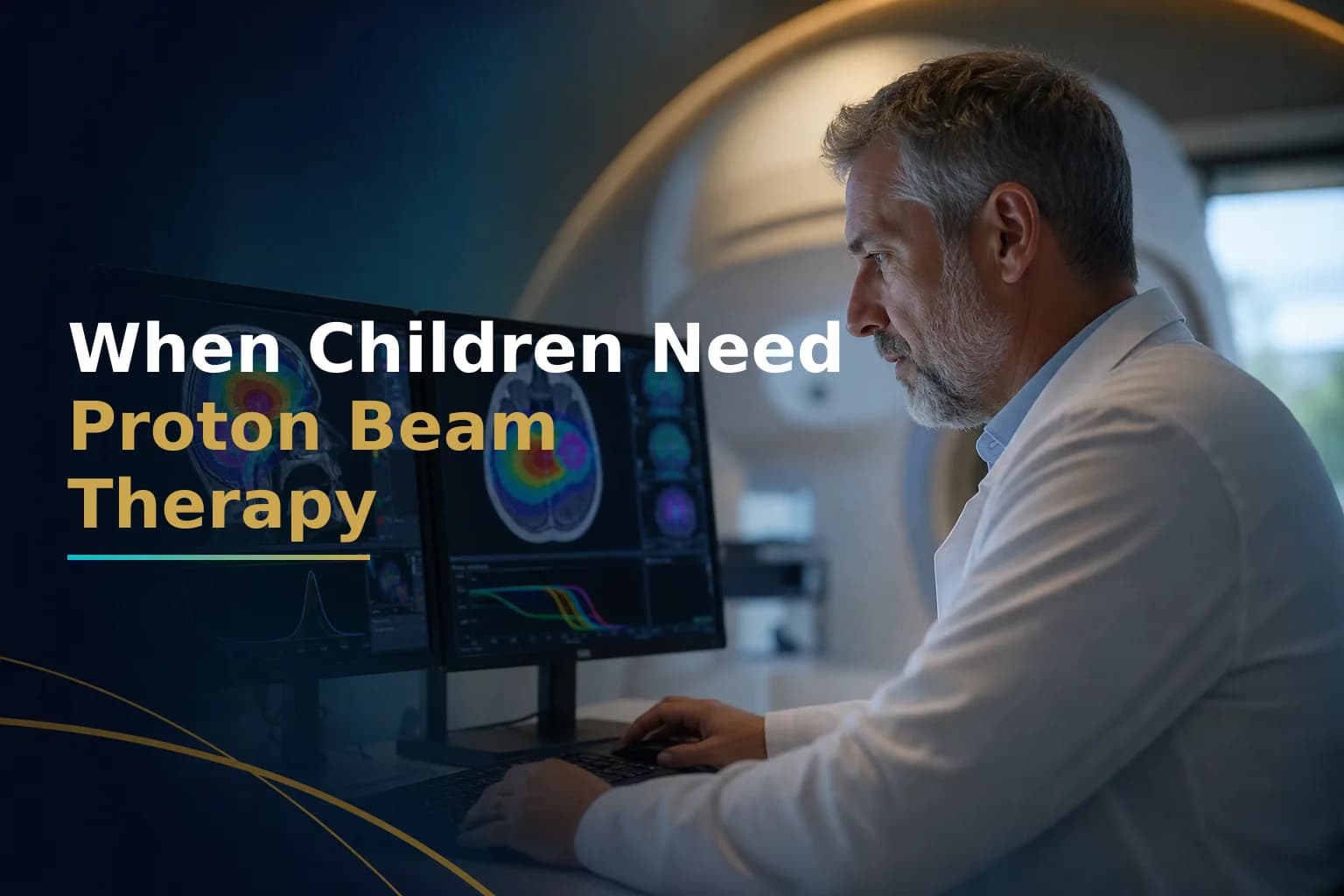
Proton therapy uses charged particles instead of X-rays. The physics work very differently. As protons travel through tissue, they slow down and release most of their energy at a specific depth. This is called the Bragg peak. After that peak, energy release drops sharply and is almost zero. There is very little radiation beyond the tumor target.
In practical terms, a proton beam puts the strongest radiation inside the tumor while greatly reducing the dose to tissue on the far side. A study published in a peer-reviewed radiation journal found that proton therapy reduced radiation dose to surrounding healthy brain structures compared to conventional X-ray techniques in young patients with brain tumors.
For midline tumors, where critical structures sit all around the tumor, the ability to reduce radiation beyond the target matters. The cochlea, hypothalamus, pituitary gland, and temporal lobes can all receive much less radiation when protons replace X-rays.
Why the Developing Brain Is Especially Vulnerable
Radiation affects all brain tissue to some degree. But a young child's developing brain is more sensitive to radiation damage than an adult brain. The effects aren't always visible right away. They emerge over months and years.
Common long-term effects of brain radiation in children include:
- Decline in IQ scores and processing speed
- Memory and working memory difficulties
- Trouble in school, particularly in reading and math
- Hearing loss if the cochlea receives significant radiation
- Hormonal changes from hypothalamus or pituitary exposure
- Increased long-term risk of secondary brain tumors
A systematic review comparing proton and X-ray radiation in pediatric brain tumor patients found that children treated with proton therapy showed better outcomes on measures of IQ, processing speed, and memory. The full analysis is available through NIH PubMed Central. The review concluded that proton therapy protected brain function better than standard X-ray radiation in this patient group.
This is why many pediatric radiation oncologists prefer proton therapy for young children with brain tumors whenever it is possible, regardless of tumor grade.
For a detailed look at how radiation-related thinking and learning problems appear in school and daily life, see our article on thinking and learning changes after pediatric brain tumor treatment.
Who Among Children With DMG May Benefit From Proton Therapy
This is where the discussion gets complicated. For high-grade H3K27M-mutant DMG (including classic DIPG), survival time is short in most cases. A 2015 international pediatric proton therapy consensus found agreement that protons worked best for low-grade pediatric gliomas. For high-grade tumors with poor survival rates, fewer children would live long enough to benefit from proton therapy's long-term protection.
However, there is more to consider. Several factors may support proton therapy even for children with high-grade DMG:
- Tumor location and nearby structures: Thalamic DMGs and tumors near the cochlea or optic nerves sit next to structures where reducing radiation has immediate benefit, not just long-term benefit. Protecting hearing and vision during treatment and in the months after matter.
- Very young age: For children under age five, the developing brain is at its most sensitive. Even a few months of reduced radiation to normal tissue may reduce immediate side effects and protect quality of life during treatment.
- Tumor genetics and subtype: Not all DMGs have the same survival rates. H3 wild-type diffuse midline gliomas and thalamic DMGs may have different survival patterns than classic pontine H3K27M-mutant DIPG. Children with DMG who survive longer than expected benefit from whatever radiation protection was built into their original treatment plan.
- Clinical trial participation: New combinations of radiation with drugs and targeted treatments are being tested in active trials. If a child is in a trial that may extend survival, the long-term protection of proton therapy becomes more important.
A comprehensive review of proton therapy for children with brain and spinal cord cancer concluded that proton therapy evidence is strongest when longer survival is a realistic goal. But the review also noted that reducing side effects during and after treatment has value even for patients whose survival outlook is uncertain.
What the Evidence Shows for Proton Therapy in DIPG Specifically
It's important to understand what the research actually shows. A detailed review of radiation approaches for diffuse intrinsic pontine glioma, available through PubMed Central, noted that while proton therapy reduces radiation to healthy tissue, the extremely poor survival rate of classic DIPG means many children may not live long enough to benefit from proton therapy's full long-term protection. This is a real limitation of using protons in the highest-grade DMGs.
At the same time, research shows this thinking changes as new treatments extend survival in some patients. Clinical trials are testing radiation combined with drugs that make tumors more sensitive to radiation, targeted drugs, and immune system treatments that may help some DMG patients live longer. For those children, the type of radiation chosen at diagnosis will matter more than it did years ago.
The field is changing. Families should ask about the choice between proton and X-ray radiation. It's worth a direct, detailed conversation with the radiation oncology team before the plan is finalized.
Access to Proton Therapy and Practical Considerations
Proton therapy centers are located mostly at large academic cancer centers. The technology requires expensive equipment and is not available at most community hospitals. Depending on where a family lives, getting proton therapy may require weeks of travel for a full six-week course.
Insurance coverage for proton therapy in pediatric brain tumors varies. Some plans cover it with prior authorization; others do not. Financial help for travel and lodging may be available through advocacy organizations and some treatment centers. Ask about financial help early, before the radiation decision is made.
Before a radiation plan is finalized, families may want to ask the radiation oncology team for a comparison of what a proton plan versus an X-ray plan would deliver to critical structures. Many proton centers offer remote planning consultations before a family commits to travel. This comparison makes the pros and cons clear rather than abstract.
When surgery is not a primary option and radiation is the main treatment, some families also explore minimally invasive procedures for tumors that come back. Our article on MRI-guided laser ablation for recurrent pediatric brain tumors covers one such option in detail.
Clinical Trials Combining Radiation With New Drugs
Radiation is no longer studied alone for DMG. A number of active trials are combining radiation with drugs designed to make tumor cells more vulnerable to radiation damage, stop tumor cells from fixing radiation damage, or activate the immune system to attack the tumor.
One ongoing study—NCT06894979 at ClinicalTrials.gov—is testing the addition of AZD1390 (a drug that stops cells from fixing radiation damage) to standard radiation for newly diagnosed high-grade glioma, diffuse midline glioma, and DIPG. The goal is to see whether this combination produces stronger and longer-lasting tumor control compared to radiation alone.
As trials like this move forward, whether proton or X-ray radiation was used at the start may become important. Children who survive longer—whether due to trial drugs, genetic factors, or both—benefit more from whatever effort was made to reduce radiation to healthy tissue in their initial treatment.
Questions to Ask the Radiation Oncology Team
- Is proton therapy available at this center, or can you refer us to a proton center for a consultation?
- Can you provide a comparison showing how a proton and X-ray plan would differ for my child's tumor?
- Given my child's age, tumor location, and genetic makeup, which critical structures are you most focused on protecting?
- Are there open clinical trials that combine radiation with drugs to sensitize tumors or target cancer—and does the trial allow proton therapy?
- If we pursue proton therapy at another center, how will coordination with the neuro-oncology team here work?
- Does insurance cover proton therapy for this diagnosis, and is there a financial counselor who can help us understand our options?
When to Talk to Your Doctor
Ask about proton therapy before the radiation plan is finalized—ideally at the first consultation with the radiation oncologist. Once an X-ray plan is in place and treatment begins, switching to protons is not straightforward. Early conversations give families the information they need to make informed decisions. If your current center does not offer proton therapy, ask whether a proton planning consultation is possible before choosing X-rays. Second opinions from major pediatric neuro-oncology centers are appropriate and often encouraged.
This article is for general information and is not a substitute for medical advice. Always consult your oncologist or care team about your specific situation.