Key Takeaways
- Checkpoint inhibitors — the immunotherapy drugs that transformed melanoma and lung cancer — have comprehensively failed as single agents in GBM. A systematic review of 106 clinical trials found no survival improvement.
- This failure is not because immunotherapy cannot work in the brain. GBM has built a uniquely hostile immune environment that requires fundamentally different strategies.
- The most promising approaches now target the reasons checkpoint inhibitors failed: oncolytic viruses, LITT + pembrolizumab, IL-15 agonist combinations, and neoadjuvant checkpoint therapy.
- Vaccine platforms — dendritic cell, RNA-lipid particle, and personalized neoantigen vaccines — aim to teach the immune system what the tumor looks like before asking it to kill.
- Over 100 immunotherapy clinical trials in GBM are currently active. Understanding why past approaches failed helps patients evaluate which trials may be worth pursuing.
Why Checkpoint Inhibitors Alone Have Failed in GBM
The story of immunotherapy in glioblastoma begins with a disappointment that most patients have already encountered: checkpoint inhibitors do not work as single agents in this disease.
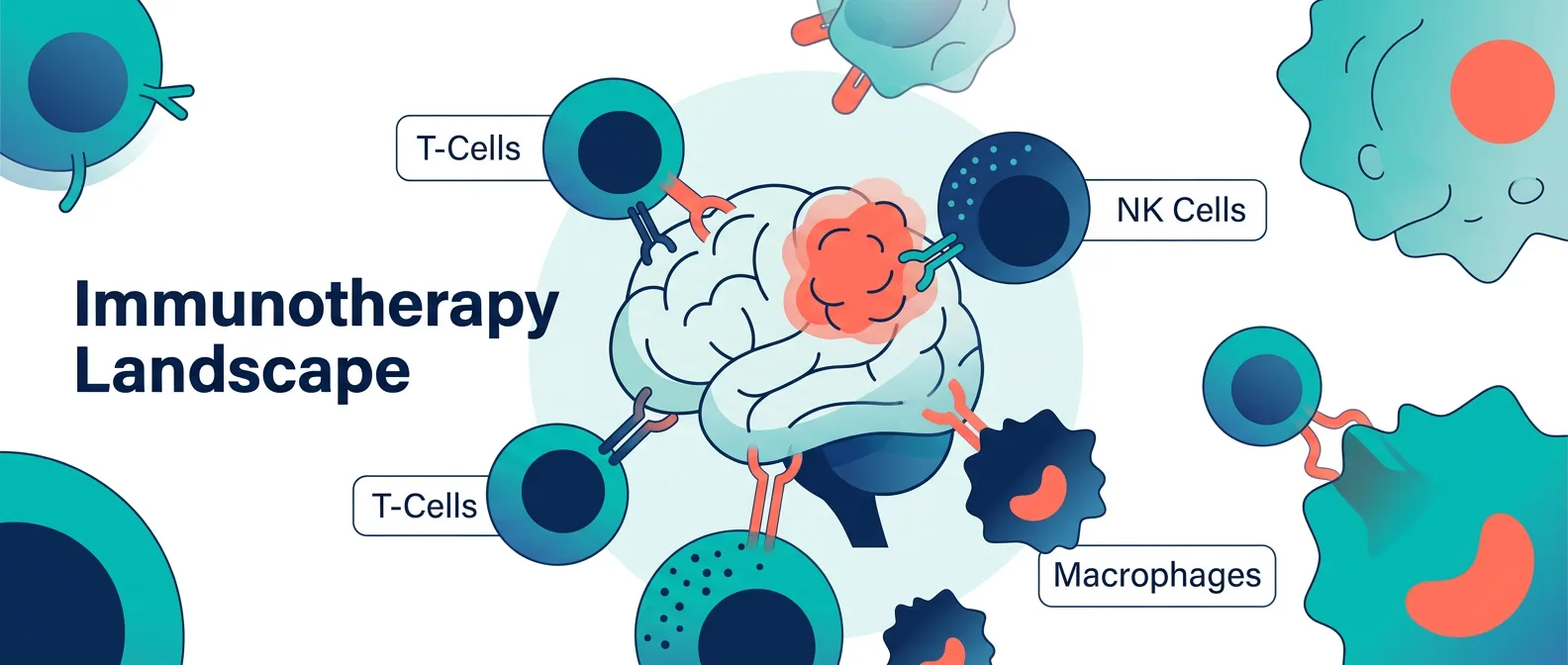
Checkpoint inhibitors — drugs like nivolumab (anti-PD-1), pembrolizumab (anti-PD-1), and ipilimumab (anti-CTLA-4) — work by releasing the brakes on T cells. In many cancers, tumor cells exploit immune checkpoints to suppress the T cells that would otherwise attack them. By blocking these checkpoints, the drugs allow T cells to recognize and destroy the tumor.
In glioblastoma, this approach has consistently failed to improve survival. The definitive trials — CheckMate 143, CheckMate 498 and CheckMate 548 — were all negative. A 2024 systematic review analyzing 106 clinical trials found that checkpoint inhibition has not improved overall survival compared to standard of care.
Understanding why this happened is essential, because the reasons point directly to where the next generation of immunotherapy is heading.

| Barrier | Description |
|---|---|
| Immunosuppressive TME | TAMs, MDSCs, and Tregs constitute up to 30–50% of tumor mass. TGF-β, IL-10, and IDO create a chemical environment hostile to immune attack. T cells that enter are rapidly exhausted. |
| Low Mutation Burden | GBM has low to moderate tumor mutation burden, generating fewer neoantigens — giving the immune system less to recognize compared to melanoma or lung cancer. |
| Blood-Brain Barrier | Though disrupted around GBM tumors, the BBB remains a significant bottleneck for immune cell trafficking from peripheral lymph nodes into the brain. |
| Treatment-Induced Immunosuppression | Temozolomide causes persistent lymphopenia. Dexamethasone is a potent immunosuppressant. By the time patients consider immunotherapy, their immune systems are often compromised. |
What Is Working: The Combination Revolution
The emerging consensus: checkpoint inhibitors are not the wrong idea — they were applied the wrong way. The strategies now showing signal first remodel the tumor microenvironment to make it susceptible, then apply immune activation.

| Focus | Strategy | Trial | Description |
|---|---|---|---|
| Timing | Neoadjuvant Pembrolizumab: Timing Changes Everything | Phase IV confirmatory — NCT05235737 | Pembrolizumab given before surgery (neoadjuvant) demonstrated prolonged survival — the tumor itself serves as an antigen source that primes the immune response. Giving the drug after surgery may be too late. |
| Barrier | LITT + Pembrolizumab: Breaking Down the Barrier | Phase II — NCT06558214 (triple combo with TTFields) | LITT disrupts the blood-brain barrier and creates a pro-inflammatory environment. Combined with pembrolizumab, it significantly improved median survival versus pembrolizumab alone. |
| Innate | Anktiva + NK Cells + TTFields: Chemotherapy-Free Immune Combination | Phase 2 recruiting | IL-15 superagonist activating NK cells achieved 100% disease control in 5 recurrent GBM patients, including 3 objective responses. All participants showed reversed lymphopenia — directly addressing a key barrier. |
| Viral | Oncolytic Viruses + Checkpoint Inhibitors | CAPTIVE Trial — NCT02798406 | DNX-2401 + pembrolizumab achieved 12.5-month median OS in 48 recurrent GBM patients. Over 56% demonstrated clinical benefit. Patients with pre-existing inflammatory signatures responded best. |
| Cytokine | IL-12 + Anti-PD-1: Rewiring the Microenvironment | Phase II — NCT04006119 | IL-12 shifts the TME from immunosuppressive to immune-permissive. Combined with anti-PD-1, it reported 9.8-month median OS with enhanced intratumoral immune activity. |
Vaccines: Teaching the Immune System to Recognize GBM
Vaccine-based immunotherapy takes a fundamentally different approach: rather than releasing existing brakes or engineering new weapons, vaccines aim to educate the immune system to recognize and target tumor-specific antigens.

| Platform | Description |
|---|---|
| Dendritic Cell Vaccines | Patient's dendritic cells are loaded with tumor antigens and infused back to stimulate tumor-specific immune responses. DOC1021 is in Phase II for newly diagnosed GBM. |
| RNA-Lipid Particle Vaccines | mRNA encoding tumor antigens prompts the patient's own cells to produce antigens and trigger immune response. The platform is flexible — updatable as tumors evolve. |
| Personalized Neoantigen Vaccines | Tumor sequencing identifies unique mutations, then a custom vaccine targets those specific neoantigens. The ultimate expression of precision immunotherapy. |
The Myeloid Target: Reprogramming the Tumor's Immune Bodyguards
An emerging direction focuses not on T cells but on the myeloid cells — macrophages, MDSCs, and microglia — that dominate the tumor microenvironment. Tumor-associated macrophages make up a substantial portion of the GBM tumor mass and are predominantly polarized toward an immunosuppressive (M2-like) phenotype.
Strategies under investigation include CSF-1R inhibitors (depleting or reprogramming immunosuppressive macrophages), CD47/SIRPα axis blockers (removing the "don't eat me" signal from tumor cells), and engineering macrophages to produce bispecific T-cell engagers (BiTEs). These address the root cause of the immune-cold microenvironment.
Biomarker-Guided Patient Selection: The Key to Unlocking Immunotherapy
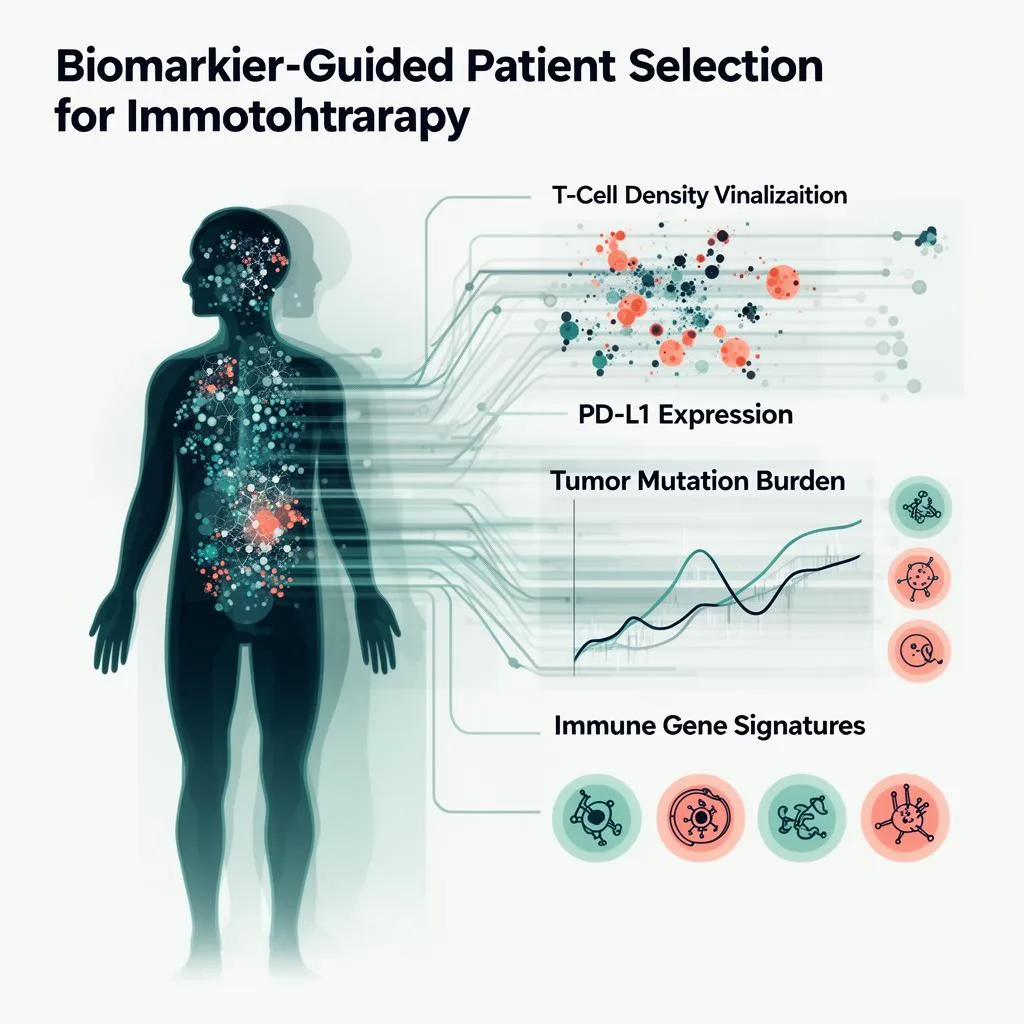
One critical lesson from checkpoint inhibitor failures: GBM is not a monolithic disease from an immunological perspective. Identifying which tumors are more immunologically active is essential for matching patients to the right therapies.
| Biomarker | Description |
|---|---|
| CD3+ T Cell Density | Higher pre-treatment intratumoral T cell density was positively associated with survival in the City of Hope CAR-T trial. |
| Interferon Gene Signatures | The CAPTIVE oncolytic virus trial found interferon-related gene activity predicted clinical benefit from combination therapy. |
| PD-L1 Expression | Moderate expression on immune cells may paradoxically indicate a more therapy-responsive tumor — not just immune evasion. |
| Tumor Mutation Burden | Rare hypermutated GBMs may respond to checkpoint therapy similarly to MSI-high colorectal cancer. |
What This Means for Patients Today
- Understand why single-agent checkpoint inhibitors are unlikely to help — If your oncologist suggests nivolumab or pembrolizumab monotherapy outside of a clinical trial, ask about the evidence base.
- Look for combination trials — Oncolytic virus + checkpoint, LITT + checkpoint, IL-15 agonist + NK cells + TTFields, neoadjuvant checkpoint — these are the strategies showing signal.
- Ask about your tumor's immune profile — If you have had surgery, ask whether your tumor tissue was analyzed for T cell infiltration, PD-L1 expression, or interferon gene signatures.
- Consider timing — Neoadjuvant approaches have shown surprising benefit. If facing re-resection, ask about neoadjuvant immunotherapy trials.
- Understand the lymphopenia factor — Ask your oncologist to check your absolute lymphocyte count — severely lymphopenic patients may benefit from IL-15 agonist approaches.
- Monitor the field — With over 100 active immunotherapy trials and data maturing rapidly, search clinicaltrials.gov periodically and follow ASCO and SNO updates.
References
- Landscape of immune checkpoint inhibitor clinical trials in glioblastoma. Neuro-Oncology Advances, 2024; 6(1):vdae174. Oxford Academic
- Immunotherapy for glioblastoma: current state, challenges, and future perspectives. Cellular & Molecular Immunology, 2024. Nature
- Overcoming immunotherapy resistance in glioblastoma. Frontiers in Pharmacology, 2025; 16:1584688. Frontiers
- Recent advances in immunotherapy for gliomas. Frontiers in Immunology, 2026; 16:1690464. Frontiers
- Emerging insights into the immunosuppressive TME and implications for GBM immunotherapy. Frontiers in Immunology, 2025. PMC
- Immune checkpoint blockade in glioblastoma: overcoming challenges. Oncology and Translational Medicine, 2026; 12(1):15–37. LWW
- Update on clinical trial research of immunotherapy for glioblastoma. Frontiers in Immunology, 2025; 16:1582296. Frontiers
- Immune escape in glioblastoma: mechanisms and implications. Biology, 2023; 12(12):1528. MDPI
- Glioblastoma and immune checkpoint inhibitors: available treatment options. IJMS, 2024; 25(19):10765. MDPI
- Singh S, et al. Glioblastoma at the crossroads. Signal Transduction and Targeted Therapy, 2025; 10:213. Nature
- CAPTIVE trial (DNX-2401 + pembrolizumab). NCT02798406
- Neoadjuvant pembrolizumab Phase IV confirmatory study. NCT05235737
- TTFields + pembrolizumab + LITT combination trial. NCT06558214
This article is provided for educational purposes by the glioblastoma.center editorial team. It does not constitute medical advice. Treatment decisions should always be made in consultation with your neuro-oncology team. Clinical trial availability and eligibility criteria change frequently — always verify current information directly with trial sites.
Last reviewed: March 2026