
The glucose ketone index (GKI): a patient's complete guide
Understanding GKI - the single number that tracks your metabolic state - and why lowering it may help starve glioblastoma of its preferred fuel.
What is the glucose ketone index?
The Glucose Ketone Index (GKI) is a simple ratio that captures your body's metabolic state in a single number. Developed by Dr. Thomas Seyfried at Boston College, GKI measures the balance between blood glucose (sugar) and blood ketones (an alternative fuel produced when the body burns fat).
On a standard diet, your body runs primarily on glucose. Your blood sugar is relatively high, your ketone levels are near zero, and your GKI is high (often above 20 or even 40). In this state, cancer cells - which are voracious glucose consumers - have abundant fuel.
On a well-formulated ketogenic diet or during therapeutic fasting, your body shifts to burning fat for fuel. Blood glucose drops, blood ketones rise, and your GKI drops into the therapeutic range. In this state, healthy brain cells adapt to using ketones efficiently, but cancer cells cannot - because their damaged mitochondria lack the metabolic flexibility to process ketones effectively.
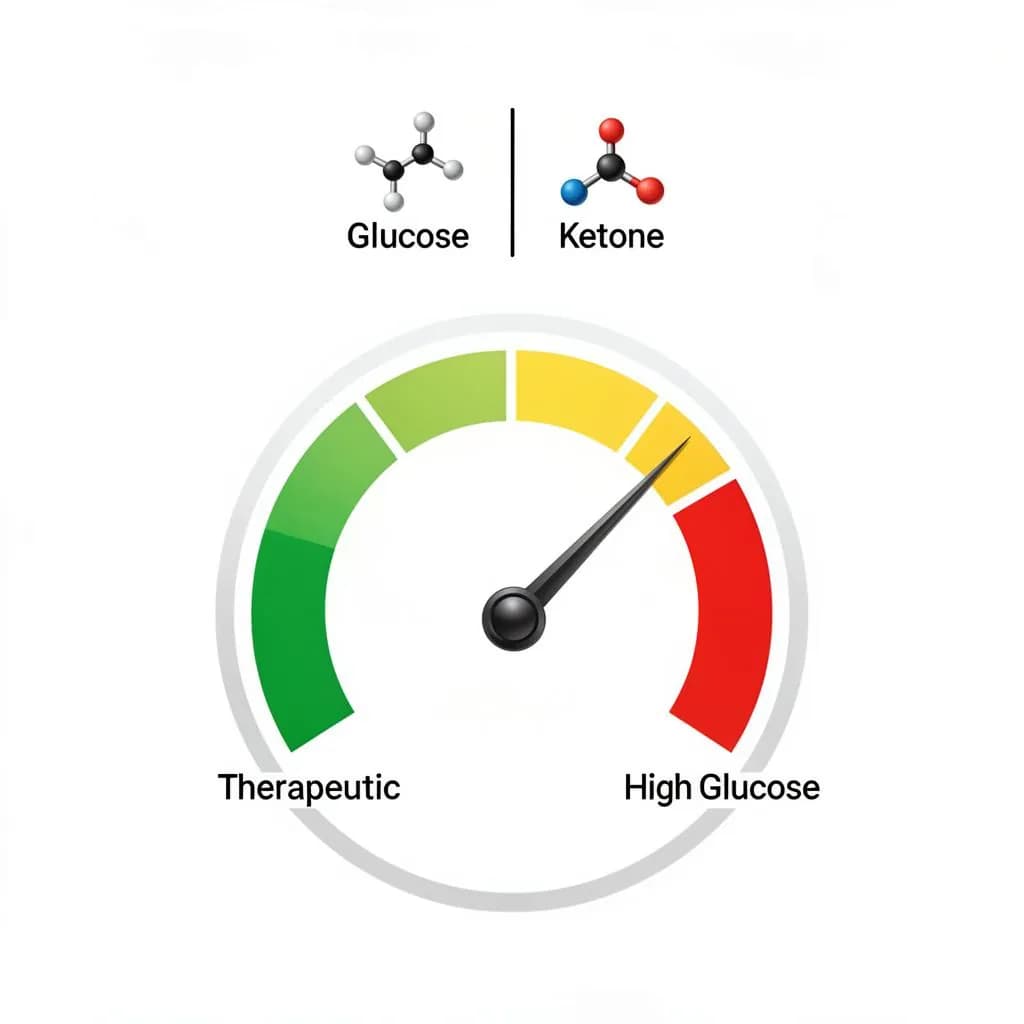
The Formula: GKI = Blood Glucose (mmol/L) ÷ Blood Ketones (mmol/L). If your glucose is in mg/dL, divide by 18.016 first to convert to mmol/L. A lower GKI means your body is running more on ketones and less on glucose.
Understanding the GKI zones
Not all ketosis is created equal. The therapeutic value depends on how low your GKI goes and how consistently you maintain it.
Deep therapeutic ketosis
Maximum metabolic stress on cancer cells. Typically achieved during therapeutic water fasting (3–7 days) under medical supervision. Difficult to sustain and not appropriate for all patients. Associated with the strongest anti-tumor metabolic effects in preclinical models.
Therapeutic ketosis zone
The primary target range for cancer metabolic therapy. Achievable with a strict ketogenic diet (typically 20–30g net carbs/day, high fat, moderate protein) combined with caloric management. This is the range that Dr. Seyfried's research targets for GBM patients, and the range reported in published case studies showing tumor management.
Moderate ketosis
You are in nutritional ketosis, producing ketones and burning fat. This range offers general metabolic health benefits and is commonly achieved by people following a standard ketogenic diet. However, it is not considered therapeutically sufficient for cancer metabolic therapy based on current evidence.
High glucose dominance
Typical of a standard Western diet high in carbohydrates and sugar. Glucose is the dominant fuel. In this state, cancer cells have abundant access to their preferred energy source. Most people eating a conventional diet have a GKI of 20–40+.
Why it matters: the Warburg effect and cancer's glucose addiction
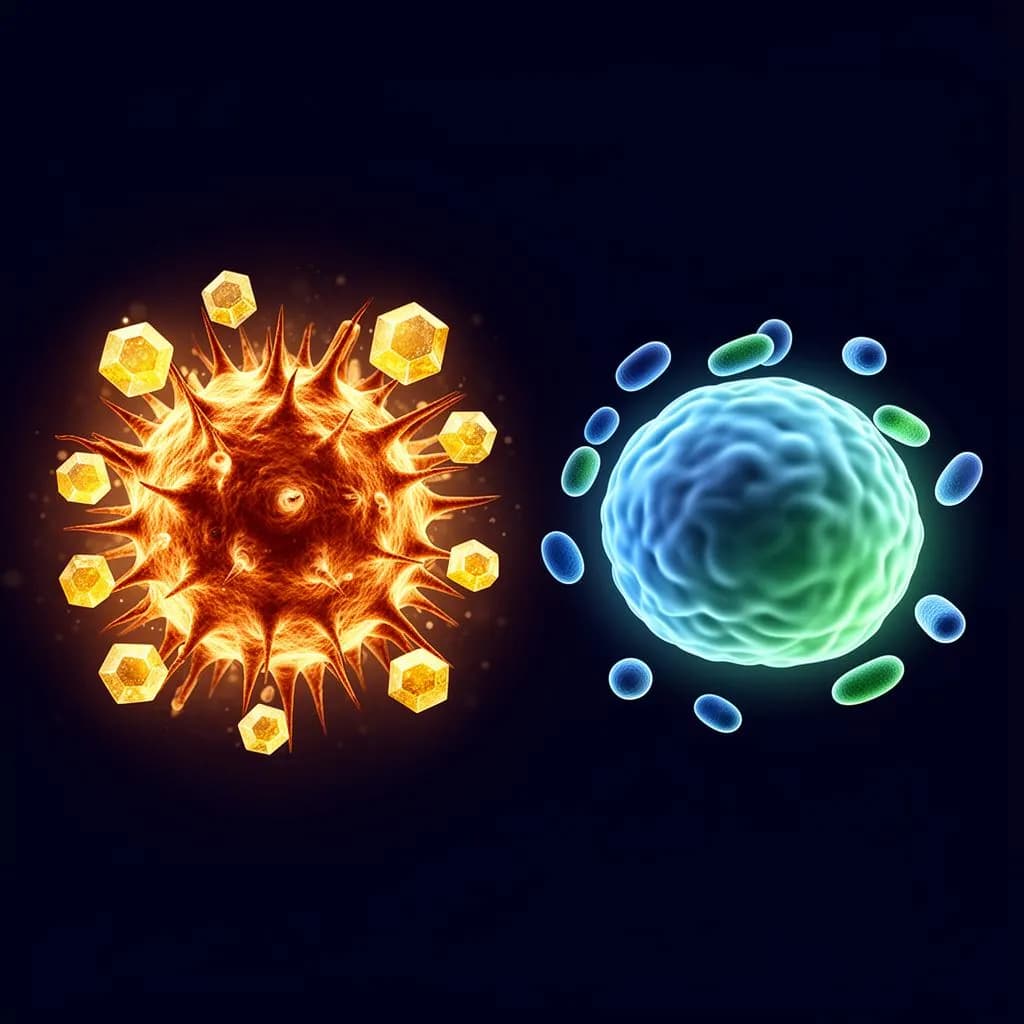
In 1924, Nobel laureate Otto Warburg observed that cancer cells consume glucose at dramatically higher rates than normal cells - even in the presence of oxygen. This phenomenon, now called the Warburg Effect, is one of the most consistently observed features of virtually all cancers, including glioblastoma.
Glioblastoma cells are particularly glucose-hungry. They upregulate glucose transporters (especially GLUT1 and GLUT3) to pull in as much sugar as possible, and they rely on aerobic glycolysis - a fast but inefficient way to generate energy that also produces the raw materials cancer cells need to grow and divide.
The critical insight behind GKI-targeted metabolic therapy is this: healthy brain cells can switch to burning ketones when glucose is scarce, but cancer cells largely cannot. Normal neurons and glial cells have functioning mitochondria that can efficiently metabolize ketone bodies (beta-hydroxybutyrate and acetoacetate). GBM cells, with their damaged and dysfunctional mitochondria, cannot make this switch.
By lowering your GKI into the therapeutic range, you are essentially restricting the fuel supply to the tumor while maintaining fuel supply to healthy brain tissue.
What does the research say?
The evidence for GKI-targeted metabolic therapy in glioblastoma ranges from strong preclinical data to published case reports and early-phase clinical trials. Here is an honest assessment of where the science stands.
Case report: 80-month survival with ketogenic metabolic therapy alone
Seyfried et al., Frontiers in Nutrition, 2021
A 32-year-old man with IDH1-mutant glioblastoma was treated with ketogenic metabolic therapy (KMT) without chemotherapy or radiation. He maintained a strict ketogenic diet with GKI values consistently in the 1.0–2.0 range, combined with periodic therapeutic fasting.
At 80-month follow-up, the patient remained alive with stable disease and maintained quality of life. While this is a single case with favorable molecular markers (IDH1-mutant), it represents the longest documented survival with KMT as the primary treatment approach.
Read full case reportCase report: 24-month GBM management with KMT + modified standard of care
Elsakka et al., Frontiers in Nutrition, 2018
A patient with GBM received standard of care (surgery, radiation, temozolomide) combined with ketogenic metabolic therapy targeting a GKI of 1.0–2.0. The metabolic protocol included calorie-restricted ketogenic diet, intermittent fasting, and stress management.
At 24-month follow-up, the patient showed stable disease without recurrence - well beyond the 14.6-month median survival for standard treatment alone.
Read full case reportPhase 1 clinical trial: ketogenic diet + standard of care in newly diagnosed GBM
Nature Scientific Reports, 2025
A phase 1 safety and feasibility trial combined a ketogenic diet with standard Stupp protocol (radiation + temozolomide) for newly diagnosed GBM patients. The study demonstrated that the ketogenic diet was safe and feasible alongside standard treatment.
Patients who achieved and maintained lower GKI values showed trends toward better progression-free survival, though the study was not powered to demonstrate efficacy. Importantly, the diet did not interfere with standard treatment tolerability.
Read the trial publicationClinical research framework for ketogenic metabolic therapy in GBM
Duraj, Seyfried, et al., BMC Medicine, December 2024
A landmark 2024 paper in BMC Medicine, authored by 26 researchers including Seyfried, proposed a standardized clinical research framework for ketogenic metabolic therapy in GBM. The framework recommends GKI monitoring as a primary biomarker and establishes guidelines for dietary composition, fasting protocols, and outcome measurements.
This is a real step toward the rigorous, randomized clinical trials that could establish whether KMT improves outcomes in GBM.
Read the framework proposalPreclinical evidence: ketogenic diet induces anti-tumor astrocyte response
Cellular and Molecular Life Sciences, February 2025
A 2025 study demonstrated that a ketogenic diet induces an inflammatory reactive astrocyte phenotype in the tumor microenvironment that actively reduces glioma growth. This suggests the ketogenic diet may have anti-tumor effects beyond simple glucose restriction - it may reprogram the brain's own immune-like cells to fight the tumor.
Read the studyAn honest assessment of the evidence
Strong preclinical evidence: Multiple animal studies show ketogenic diets slow glioma growth, enhance radiation and chemotherapy effectiveness, and extend survival.
Published case reports: Several documented cases show extended survival with KMT, particularly when GKI is maintained in the 1.0–3.0 range.
Safety established: Phase 1 trials confirm the ketogenic diet is safe alongside standard GBM treatment and does not interfere with treatment tolerability.
No large randomized controlled trial yet: The definitive Phase III RCT comparing standard care + KMT vs. standard care alone has not been completed. The 2024 BMC Medicine framework is designed to enable exactly this.
Compliance is challenging: Maintaining GKI in the 1.0–3.0 range long-term requires significant dietary discipline, regular monitoring, and ideally professional nutritional guidance.
The press-pulse strategy: GKI in context
GKI monitoring is central to what Dr. Seyfried calls the "Press-Pulse" metabolic strategy - a framework inspired by extinction biology that applies continuous background stress ("press") combined with intermittent acute stresses ("pulse") to overwhelm cancer cell survival mechanisms.
The "Press"
A sustained ketogenic diet that maintains a low GKI (1.0–3.0), continuously depriving cancer cells of glucose while fueling healthy cells with ketones. This is the constant background pressure on the tumor's metabolism.
The "Pulse"
Intermittent acute metabolic stresses - such as therapeutic fasting (pushing GKI below 1.0), 2-DG (a glucose analog that blocks glycolysis), or hyperbaric oxygen therapy - that deliver acute shocks the cancer cell's damaged metabolism cannot withstand.
The power of Press-Pulse lies in the combination: neither the sustained ketogenic diet nor the intermittent pulses may be sufficient alone, but together they create a metabolic environment that overwhelms the cancer cell's ability to adapt. GKI is the biomarker that tells you whether the "press" is working - it is your daily readout of metabolic state.
How to measure your GKI

Step-by-step guide
Get a dual glucose/ketone meter
You need a blood meter that measures both glucose AND blood ketones (beta-hydroxybutyrate). Popular options include the Keto-Mojo GK+, Precision Xtra (Abbott), and FreeStyle Optium Neo. Urine ketone strips are NOT accurate enough for GKI calculation.
Test blood glucose
Using a glucose test strip, prick your finger and apply a drop of blood. Record the reading. If your meter reads in mg/dL (common in the US), you'll need to convert: divide by 18.016 to get mmol/L.
Test blood ketones
Using a ketone test strip (different from glucose strips), test a fresh drop of blood. Record the reading in mmol/L. Ketone strips are more expensive than glucose strips - budget approximately $1–2 per test.
Calculate your GKI
Divide your glucose reading (in mmol/L) by your ketone reading (in mmol/L). Example: Glucose = 72 mg/dL = 4.0 mmol/L, Ketones = 2.0 mmol/L → GKI = 4.0 / 2.0 = 2.0 (Therapeutic Zone).
Track over time
Test at consistent times - ideally first thing in the morning (fasting) and before dinner. Keep a simple log or use an app. Look for trends, not individual readings. Your GKI will fluctuate day to day.
Conversion Quick Reference
72 mg/dL = 4.0 mmol/L
90 mg/dL = 5.0 mmol/L
54 mg/dL = 3.0 mmol/L
108 mg/dL = 6.0 mmol/L
Formula: mg/dL ÷ 18.016 = mmol/L
Calculate your GKI now
GKI calculator
Enter your blood glucose and blood ketone readings to calculate your Glucose Ketone Index.
Practical guidance for patients

Do
- ✓ Work with your neuro-oncology team. KMT should complement - not replace - conversations with your oncologist. Many centers are now open to integrative metabolic approaches.
- ✓ Find a registered dietitian experienced in therapeutic ketogenic protocols (not just "keto for weight loss"). Organizations like the Charlie Foundation and Matthew's Friends maintain referral networks.
- ✓ Start gradually. Transition to a ketogenic diet over 1–2 weeks rather than abruptly. Your body needs time to adapt to fat-burning (keto-adaptation typically takes 2–4 weeks).
- ✓ Monitor consistently. Test GKI at least once daily at consistent times. Morning fasting readings are most reliable. Track trends over weeks, not individual data points.
- ✓ Prioritize whole foods. Focus on avocados, olive oil, coconut oil, fatty fish, eggs, nuts, and non-starchy vegetables. This is not a "bacon and butter" diet.
- ✓ Stay hydrated and supplement electrolytes. Sodium, potassium, and magnesium needs increase on a ketogenic diet. Deficiency causes headaches, fatigue, and muscle cramps.
Don't
- ✗ Don't stop standard treatment in favor of diet alone unless explicitly discussed with your medical team. The strongest evidence supports KMT as a complement to standard care.
- ✗ Don't pursue extreme caloric restriction if you are underweight, malnourished, or experiencing significant treatment-related weight loss. Maintaining lean body mass is critical.
- ✗ Don't rely on urine ketone strips for GKI calculation. They measure acetoacetate (not beta-hydroxybutyrate) and become unreliable as your body becomes keto-adapted.
- ✗ Don't fast without medical supervision if you are on anti-seizure medications, steroids (especially dexamethasone), or insulin. These medications require careful adjustment.
- ✗ Don't chase a specific GKI number at the expense of quality of life. A sustainable GKI of 3–4 that you can maintain for months is better than a GKI of 1.0 that leaves you exhausted after one week.
Important: dexamethasone and blood sugar
Many GBM patients take dexamethasone (a corticosteroid) to reduce brain swelling. Dexamethasone dramatically raises blood glucose - often to 150–250+ mg/dL - making it extremely difficult to achieve a therapeutic GKI. If you are on dexamethasone, discuss dose reduction strategies with your neuro-oncologist. Work toward the lowest effective dose before attempting to optimize GKI. This is a medical decision that requires close supervision.
Research references
- Seyfried TN, et al. Ketogenic metabolic therapy, without chemo or radiation, for the long-term management of IDH1-mutant glioblastoma: an 80-month follow-up case report. Frontiers in Nutrition, 2021. - PMC
- Elsakka AMA, et al. Management of glioblastoma multiforme in a patient treated with ketogenic metabolic therapy and modified standard of care: a 24-month follow-up. Frontiers in Nutrition, 2018. - Frontiers
- Duraj T, Kalamian M, Seyfried TN, et al. Clinical research framework proposal for ketogenic metabolic therapy in glioblastoma. BMC Medicine, 2024; 22:578. - Springer Nature
- Phase 1 safety and feasibility trial of a ketogenic diet plus standard of care for patients with recently diagnosed glioblastoma. Scientific Reports, 2025. - Nature
- Ketogenic diet induces an inflammatory reactive astrocytes phenotype reducing glioma growth. Cellular and Molecular Life Sciences, 2025; 82:73. - Springer Nature
- Seyfried TN, et al. Press-pulse: a novel therapeutic strategy for the metabolic management of cancer. Nutrition & Metabolism, 2017; 14:19. - PMC
- Khodabakhshi A, et al. The role of the ketogenic diet in managing glioblastoma in cancer neuroscience. Journal of Personalized Medicine, 2024; 14(9):929. - MDPI
- Ketogenic diet as a treatment and prevention strategy for cancer. Nutrition, 2024; 124:112427. - ScienceDirect
This guide is provided for educational purposes by the glioblastoma.center editorial team. It does not constitute medical advice. Dietary interventions, particularly therapeutic fasting, should only be pursued under the guidance of your neuro-oncology team and a qualified dietitian. Do not discontinue or modify any prescribed treatment without consulting your physician.