
Key Takeaways
- Most GBM patients have unmethylated MGMT, a biology that weakens temozolomide by actively repairing the DNA damage it is meant to cause.
- Paxalisib is important because it is one of the first agents developed specifically around that unmet need rather than assuming the methylated and unmethylated populations should receive the same strategy.
- The GBM AGILE trial did not meet its primary adaptive threshold, but it still showed a meaningful survival signal in newly diagnosed unmethylated patients.
- Paxalisib was not useful in recurrent GBM, which reinforces how biologically different recurrent disease is from newly diagnosed disease.
- If a phase 3 study confirms the signal, MGMT status could become a true treatment-selection marker rather than just a prognostic marker.
The Problem in One Paragraph
Approximately 65–70% of glioblastoma patients have unmethylated MGMT promoter status. In practical terms, that means the DNA repair enzyme MGMT remains active and can reverse much of the damage temozolomide is designed to cause.
For these patients, standard chemotherapy often delivers limited survival benefit while still exposing them to fatigue, nausea, myelosuppression, and infection risk. The central injustice is simple: the unmethylated majority has long been treated with a drug designed for the methylated minority.

What Paxalisib Is and How It Works
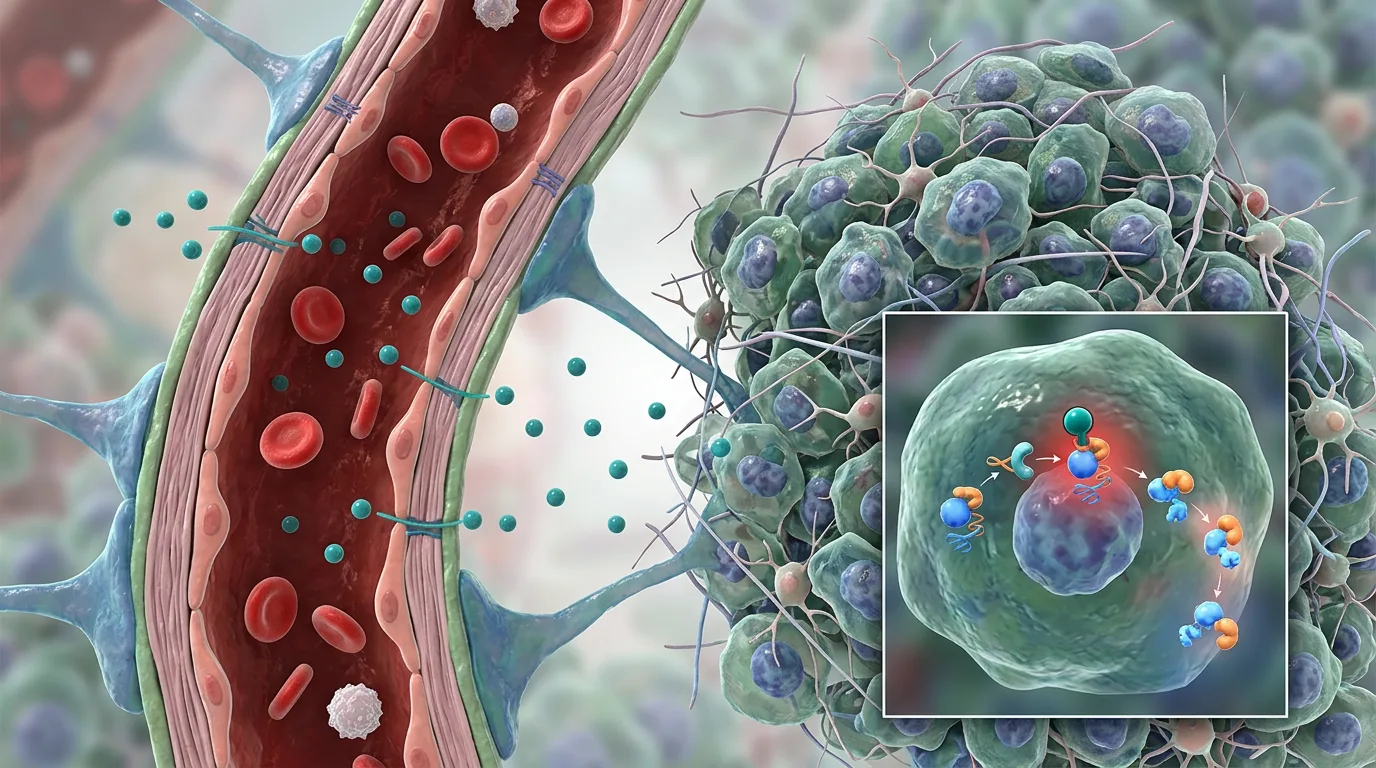
Paxalisib, formerly GDC-0084, is an oral small molecule that inhibits the PI3K/AKT/mTOR pathway, one of the most important growth and survival pathways in glioblastoma.
This pathway is frequently hyperactivated in GBM, especially in tumors with PTEN loss, and contributes to proliferation, invasion, survival, and treatment resistance.
What makes paxalisib distinctive is not just pathway relevance but brain penetration. Early PET studies showed that the drug distributes throughout the brain after oral dosing, a property many cancer drugs fail to achieve.
In other words, paxalisib is not just a theoretically interesting targeted drug. It is a targeted drug that can actually reach the organ where the disease lives.
The Data: What GBM AGILE Showed
Paxalisib was tested in GBM AGILE, an adaptive platform trial designed to compare multiple therapies efficiently across newly diagnosed and recurrent glioblastoma.
In newly diagnosed unmethylated patients, the primary Bayesian analysis did not cross the pre-specified graduation threshold. But that does not mean the drug produced no signal. The hazard ratio still favored paxalisib, and model-estimated median overall survival was 14.77 months versus 13.84 months for standard care.
The more compelling finding came from a prespecified secondary analysis using concurrent controls: median overall survival was 15.54 months with paxalisib versus 11.89 months with standard care, a 3.8-month advantage and roughly 33% relative improvement.
That signal also aligned with earlier phase 2 data, which reported median overall survival of 15.7 months and progression-free survival of 8.4 months in newly diagnosed unmethylated GBM at the 60 mg dose.

Primary Analysis: Promising, but Not Enough to Advance
The primary analysis favored paxalisib numerically, but the probability signal did not clear the strict statistical bar required to graduate within GBM AGILE.
This is why the interpretation requires nuance: the drug showed activity, but not enough activity under that trial framework to auto-advance.
Secondary Analysis: The 3.8-Month Signal
The concurrent-control comparison showed the more clinically compelling story: 15.54 months median overall survival versus 11.89 months with standard care in newly diagnosed disease.
For a subgroup that has seen very little progress in two decades, that magnitude is not trivial.
Recurrent Disease: No Benefit
Paxalisib showed no efficacy signal in recurrent GBM, where median overall survival was worse than standard care.
This fits a broader truth in glioblastoma: recurrent disease is not simply the same disease later in time. It is often more treatment-resistant and biologically reshaped by prior therapy.
Safety Profile and FDA Position
Paxalisib was generally well tolerated, with adverse effects consistent with the PI3K inhibitor class: hyperglycemia, oral mucositis, and skin rash. These effects appear manageable and predictable rather than surprising.
Regulatorily, the story is notable. Following GBM AGILE, Kazia Therapeutics and the FDA aligned on the design of a pivotal phase 3 trial in newly diagnosed unmethylated GBM, with overall survival as the primary endpoint.
That alignment matters because it means the FDA considers the question worth answering in a definitive study and has agreed on the framework to answer it.
Why This Matters for Unmethylated Patients
For MGMT methylated patients, temozolomide has a coherent biological rationale and better outcomes. For unmethylated patients, the rationale is weaker and the benefit is smaller, yet the same standard regimen has largely been applied to both groups.
If paxalisib confirms its signal in phase 3, it would represent more than a new drug. It would represent a structural change in how newly diagnosed GBM is treated: MGMT status would begin guiding therapy choice, not just estimating prognosis.
Other Approaches Targeting the Unmethylated Gap
Niraparib is being tested directly against temozolomide in newly diagnosed MGMT unmethylated GBM, using a different DNA-repair vulnerability.
BA-101 is an emerging small molecule with orphan drug designation and preclinical rationale in GBM.
Immunotherapy-based strategies are also being explored more seriously in unmethylated patients, partly because this population has the least to lose from moving beyond standard chemotherapy assumptions.
What You Should Do With This Information
- Ask whether your tumor is MGMT methylated or unmethylated — This is not a minor biomarker detail. It directly changes how much temozolomide is likely to help.
- Discuss paxalisib-related trials early — If you are newly diagnosed and unmethylated, timing matters. Access is most relevant before your options narrow.
- Request an honest conversation about temozolomide benefit — The question is not whether standard care should be rejected reflexively, but whether you understand its likely upside in your specific biology.
- Track the pivotal phase 3 timeline — If paxalisib is going to change practice, it will happen through the registrational study now aligned with the FDA.
- Compare alternatives, not headlines — Niraparib, immunotherapy strategies, and platform trials may also matter; the key is matching the right biology to the right study.
References
- Evaluation of paxalisib in GBM AGILE phase 3 registration platform trial. Neuro-Oncology, 2024. Oxford Academic
- Kazia Therapeutics Phase II/III results announcement, July 2024. PR Newswire
- FDA signals potential for standard approval of paxalisib in glioblastoma. Targeted Oncology
- Paxalisib continues to provide survival benefit over standard care in newly diagnosed unmethylated glioblastoma. OncLive
- Paxalisib phase 2 final results (NCT03522298). Journal of Clinical Oncology, 2022. ASCO Pubs
- Paxalisib PK/PD in unmethylated GBM. Annals of Oncology, 2022. Annals of Oncology
- Top brain cancer news of 2025. Targeted Oncology
- GBM AGILE adaptive platform trial. ClinicalTrials.gov
This article is provided for educational purposes by the glioblastoma.center editorial team. It does not constitute medical advice. Treatment decisions should always be made in consultation with your neuro-oncology team. Clinical trial availability and eligibility criteria change frequently.