When "Inoperable" Does Not Always Mean "Untreatable"
Hearing that your child's tumor cannot be removed with standard surgery is frightening. Surgeons use the word inoperable when a tumor sits deep inside the brain in areas like the thalamus, hypothalamus, basal ganglia, or brainstem, where traditional open surgery carries a high risk of serious harm. But inoperable doesn't always mean your child has no options.
One approach that doctors increasingly use in pediatric neuro-oncology is MRI-guided laser interstitial thermal therapy, commonly called LITT or MRgLITT. This article explains LITT, the evidence, and questions for your child's care team.
What Is LITT?
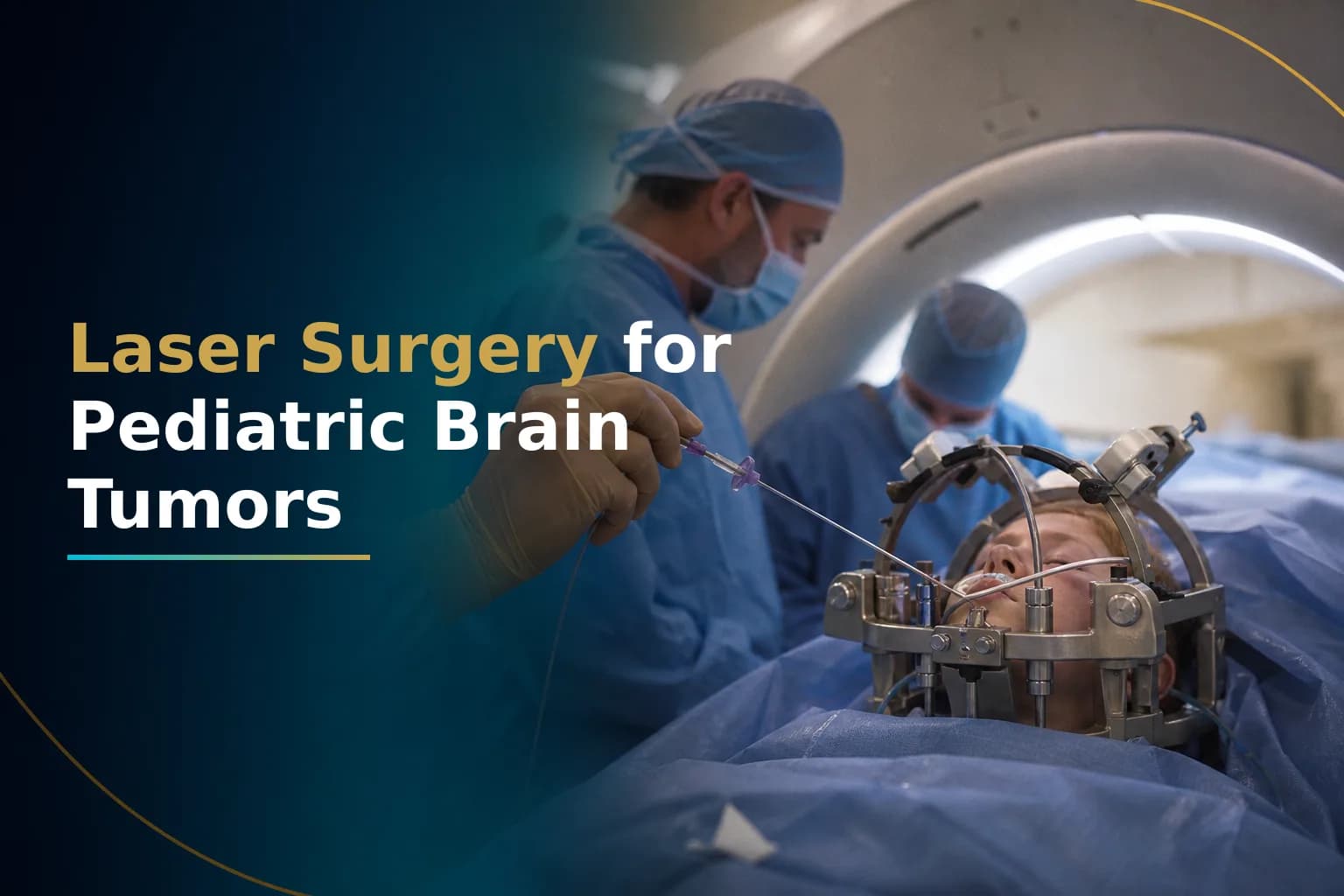
LITT uses a very thin probe (roughly the width of a large needle) placed through a small hole in the skull and guided into the tumor using real-time MRI imaging. Once in position, a laser at the tip heats and destroys tumor tissue.
A key feature of LITT is that the surgeon watches the procedure on an MRI monitor the whole time. The MRI provides thermal imaging so the team can see exactly how much tissue is being heated and protect nearby healthy brain. Research published through NIH/PubMed Central describes a clear boundary between ablated and preserved tissue, which is one reason the technique works well for tumors close to critical structures.
Because the incision is small, most children go home within a day or two, and there's no need to remove a large section of the skull.
Why Open Surgery May Not Be an Option
The brain's anatomy dictates what surgeons can safely reach. Three main factors often make open surgery too risky.
- Location in a deep or critical region. Structures like the thalamus, hypothalamus, basal ganglia, and brainstem carry signals for movement, sensation, and basic body functions like breathing. Removing tissue in these areas risks permanent damage that may be worse than the tumor itself.
- Prior surgery or radiation. If a child has already had a craniotomy, reopening the same area means dealing with scar tissue, increased bleeding risk, and fragile brain tissue. After radiation, normal tissue may not handle another major surgery.
- Functional status at recurrence. A child with neurological decline may struggle to recover from general anesthesia and a full craniotomy. A shorter procedure with a faster recovery becomes preferable.
None of this means treatment stops. It means the team looks at other tools. Laser ablation is increasingly one of them.
Which Tumors May Be Suitable for LITT?
LITT has been studied in many pediatric brain tumor types and locations. Tumors deep in the brain that are hard to reach with open surgery are the most common candidates.
Doctors at multiple centers found MRI-guided stereotactic laser ablation worked across many tumor types and locations in children, including tumors deep in the brain that conventional surgery couldn't reach. A 2024 case series focused on children with thalamic and hypothalamic low-grade gliomas and reported local control with acceptable side effects.
Tumor types studied with LITT in children include:
- Low-grade gliomas (pilocytic astrocytoma, grade 2 glioma) in deep structures, which are the most studied pediatric uses of LITT
- Diffuse midline gliomas, including tumors in the thalamus and brainstem. To understand what molecular markers like H3K27M mean for your child's treatment plan, see our article on H3K27M Mutation in Diffuse Midline Glioma
- Recurrent medulloblastoma, particularly in cases where recurrence is focal
- Ependymoma, particularly recurrent tumors at the original site
- Craniopharyngioma and hypothalamic tumors, where open surgery can cause severe hormonal and visual damage
- High-grade gliomas, in carefully selected cases at experienced centers, though with important cautions noted below
What Does the Evidence Show?
The research on LITT in children is still early. Most published studies are small, single-center reports or retrospective reviews rather than large randomized trials. That said, the available data show some promise.
In one single-center study with 88 children who had LITT, 25 had brain tumors. 17 of the 25 tumor patients (68%) had no recurrence at follow-up. 12 of the 88 patients overall (13.6%) had complications, with 3 major complications (3.4%). The authors said the approach works and called for more research to better understand outcomes.
A registered clinical trial, NCT02451215 listed on ClinicalTrials.gov, studied LITT specifically for pediatric brain tumors, reflecting the field's effort to get better evidence in children.
It's important to understand the limits of the current data. Most studies involve small numbers of patients, and follow-up times vary. LITT shows promise, but more research is needed before we can say for sure.
An Important Caution for High-Grade Tumors After Radiation
Some recurrent pediatric brain tumors are not good LITT candidates. A 2025 case report in Frontiers in Oncology showed rapid tumor growth along the laser catheter path after LITT in a previously irradiated pediatric high-grade tumor. The authors advised careful patient selection and called for more research before doctors routinely use LITT for high-grade pediatric tumors after radiation.
This doesn't mean LITT is never an option for high-grade cases. It means the team's judgment matters a lot. Families should ask about their center's specific experience with their child's tumor type and radiation history before making a decision.
What Are the Risks?
LITT is minimally invasive but carries risks. Like any brain procedure, it can cause complications.
- Swelling: The brain may swell around the treated area in the days after ablation. This is common and doctors usually manage it with steroids.
- Neurological changes: Temporary weakness, speech changes, or other deficits can happen. In one small case series, two of six pediatric patients developed temporary motor deficits after the procedure. Most patients improved over time, but permanent changes are possible depending on tumor location.
- Infection and bleeding: Any surgery carries these risks, even minimally invasive ones.
- Accelerated local growth: As described in the caution above, in some high-grade tumors that had radiation, rapid tumor growth along the catheter path occurred.
How LITT Fits Into a Broader Treatment Plan
LITT is rarely used alone. Doctors use LITT as part of a multi-step plan in several important ways.
Biopsy at the same time. The probe passes through the tumor, so the team can get a tissue sample. At recurrence, tumor biology sometimes changes. A new molecular profile might show a drug target or a clinical trial your child could join.
Blood-brain barrier disruption. Laser ablation may temporarily disrupt the blood-brain barrier around the treated area. This could let chemotherapy or immunotherapy reach further into the area, so LITT might work better with these treatments.
Follow-on therapy. Ablation addresses the tumor in that area. Systemic therapy (chemotherapy, targeted agents, or clinical trials) then targets remaining microscopic disease or spread.
Children treated before may have cognitive changes at the same time. Our article on cognitive changes and learning problems after pediatric brain tumor treatment has strategies to help families support recovery alongside ongoing therapy.
Choosing the Right Center
Few specialized children's hospitals and academic medical centers offer LITT for pediatric brain tumors, and experience varies. Better outcomes happen at centers that perform more procedures. Families should ask for a second opinion at a center that does many pediatric LITT procedures each year.
For families dealing with recurrent disease, our overview of recurrent brain tumor treatment and quality of life can help you think through your choices alongside minimally invasive options like LITT.
Questions to Bring to Your Child's Care Team
If you want to explore whether LITT is appropriate for your child, consider asking:
- Why isn't open surgery being recommended—is it location, prior treatment, or both?
- Has your center performed LITT in children with this exact tumor type and location, and how many times?
- Will the probe get a biopsy for updated molecular profiling?
- How does LITT fit into the overall treatment plan, and what systemic therapy or trial follows?
- How will follow-up MRI scans be interpreted after ablation, since ablation changes how the brain looks on imaging?
- Are there clinical trials that combine LITT with another agent that my child might qualify for?
Realistic Expectations
MRI-guided laser ablation may offer local tumor control with far less disruption than open surgery. For children with tumors in locations where a craniotomy would be too risky, LITT may be the only safe local treatment. Early research shows it can control low-grade tumors and focal recurrences in deep brain structures.
It is not a cure. You'll need systemic therapy too. It carries real risks that vary by tumor type, location, and treatment history. Make sure to talk fully with an experienced pediatric neuro-oncology team, ideally at a center where doctors perform the procedure regularly in children.
When to Talk to Your Doctor
If your child's tumor has grown or recurred and your doctors said open surgery won't work, ask your neuro-oncologist whether LITT has been considered and what they think. Ask about referrals to higher-volume centers, second opinions, and whether any open clinical trials involve laser ablation for your child's tumor type. You'll get the best advice at a center with dedicated pediatric brain tumor expertise and direct experience with minimally invasive procedures.
This article is for general information and is not a substitute for medical advice. Always consult your oncologist or care team about your specific situation.