Key Takeaways
- These platforms matter because standard GBM therapy still struggles to reach infiltrative cells that spread beyond the visible tumor and seed recurrence.
- Sonodynamic therapy uses 5-ALA plus ultrasound to trigger selective oxidative stress in tumor tissue and has already produced encouraging early survival data in recurrent disease.
- Gene therapy aims to turn the tumor into its own immune-activating factory, combining direct cell killing with a vaccine-like immune wake-up signal.
- MT-125 is notable because it targets invasion directly while also making radiation and temozolomide work better in preclinical models.
- All three approaches are being developed as additions to standard care, not simplistic replacements for surgery, radiation, or chemotherapy.
Why These Platforms Matter
Every current GBM treatment shares the same fundamental limitation: it cannot reliably eliminate the infiltrative cancer cells that spread beyond the visible tumor boundary and later drive recurrence.
Surgery removes the bulk. Radiation targets a margin. Chemotherapy is limited by the blood-brain barrier and resistance biology. But the migrating cells embedded in apparently normal brain tissue often survive.
The three platforms in this brief attack that problem from different angles: sonodynamic therapy expands reach across a hemisphere, gene therapy delivers lethal instructions directly into tumor cells while recruiting immunity, and MT-125 attempts to block the invasion machinery itself.
Sonodynamic Therapy: Sound Waves That Kill Selectively
Status: Phase 1/2 momentum
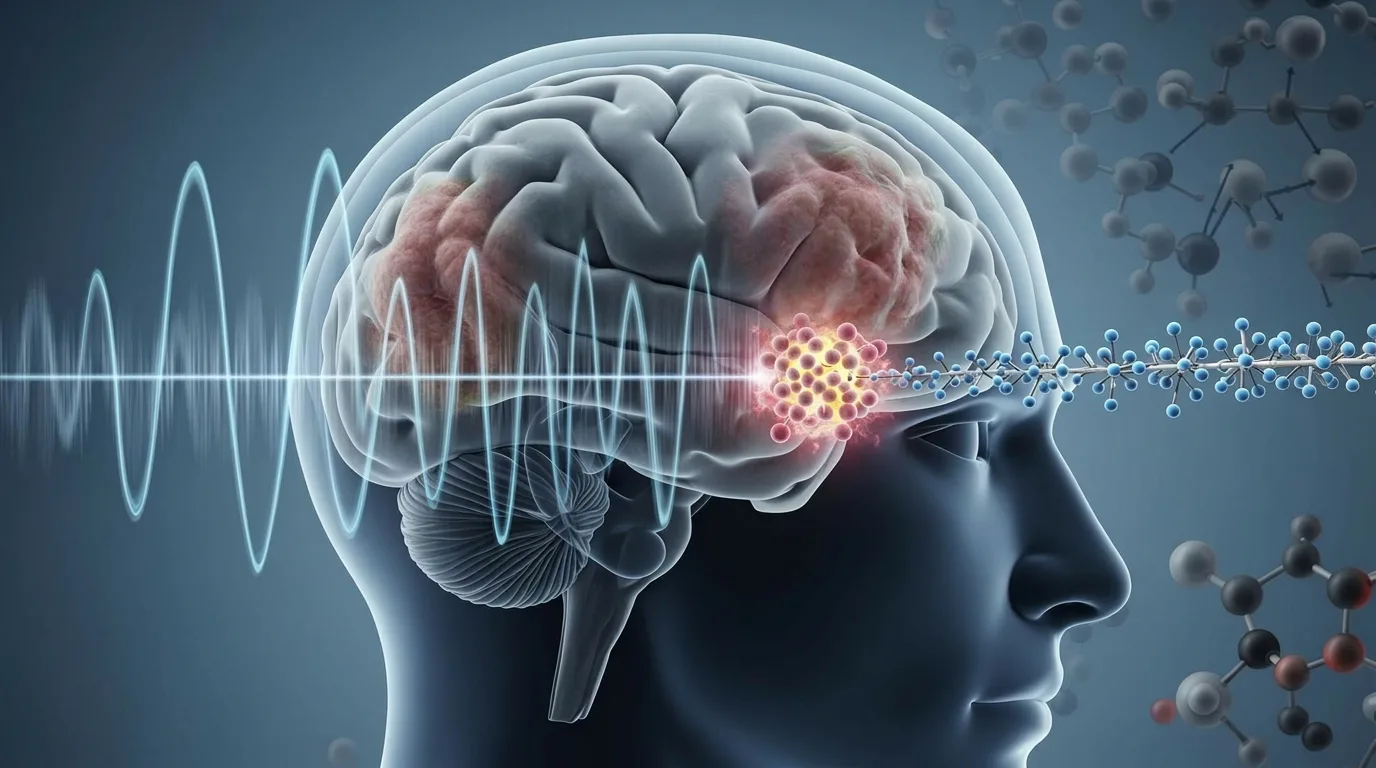
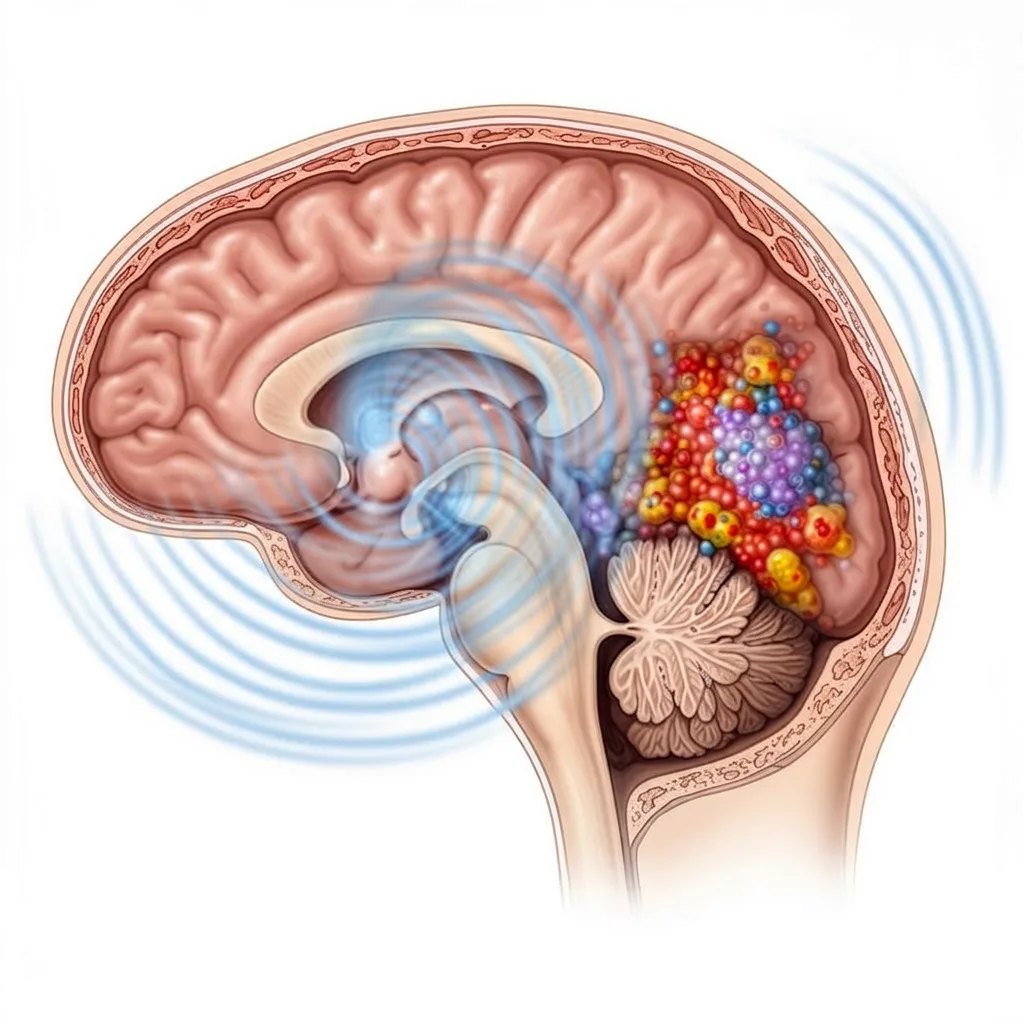
Sonodynamic therapy combines a sonosensitizer drug, usually 5-ALA, with low-intensity ultrasound. Because 5-ALA preferentially accumulates in malignant tissue, ultrasound activation can create selective oxidative stress inside tumor cells while sparing most normal brain.
What makes SDT especially interesting for GBM is reach. Unlike surgery or tightly focused radiation, it can potentially be delivered diffusely across an entire hemisphere to target scattered infiltrative cells.
Early clinical signals are strong enough to justify attention: Alpheus Medical reported median overall survival of 15.7 months in recurrent or refractory high-grade glioma, with no serious treatment-related toxicities, while the SonALAsense/Insightec first-in-human program showed feasibility, safety, and evidence of treatment-associated tumor damage.
For patients, the practical appeal is clear: non-invasive, repeatable, outpatient-friendly, and especially relevant when re-resection is not feasible.
Gene Therapy: A One-Shot Immune Awakening
Status: Pre-clinical to early clinical transition
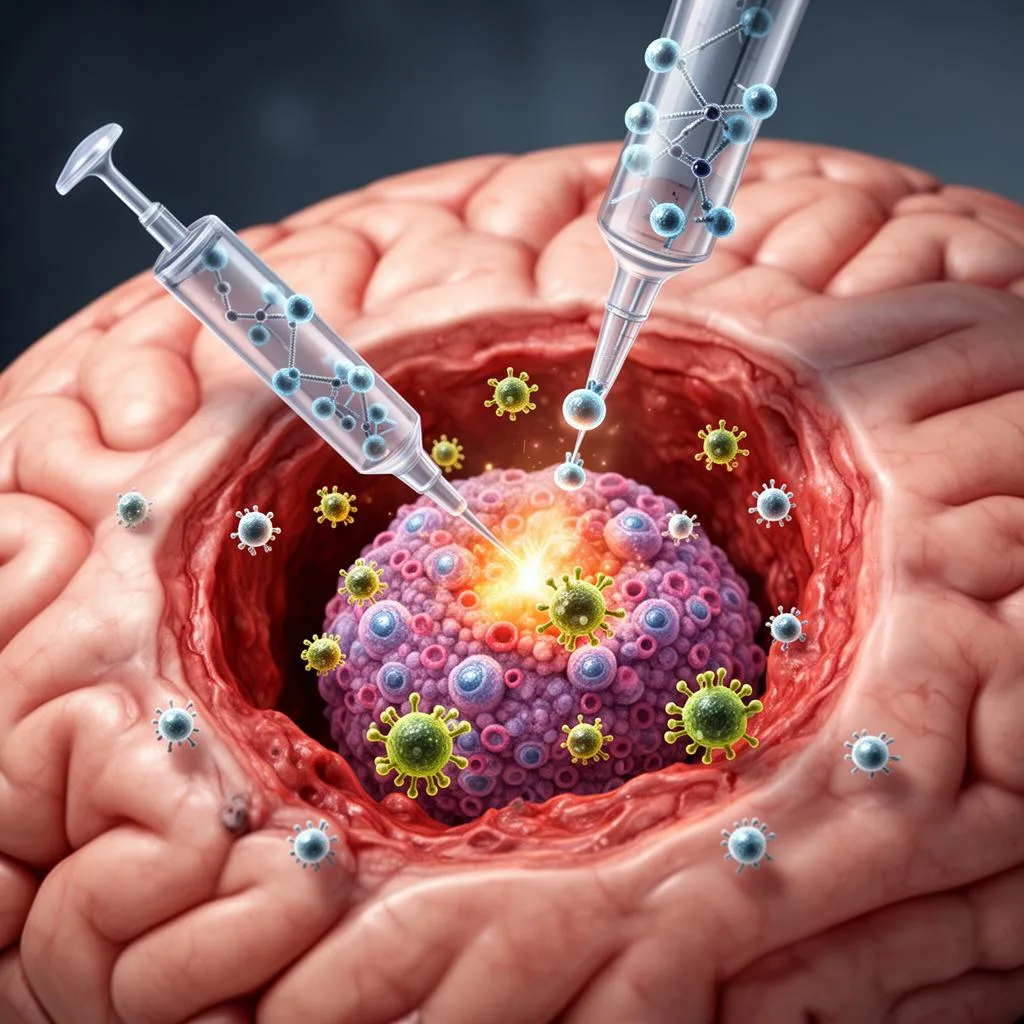
GBM gene therapy uses engineered viral vectors to deliver instructions directly into tumor cells. The objective is bigger than simple cytotoxicity: kill cancer cells and simultaneously create a stronger immune response against whatever remains.
The Trogenix platform is especially notable because it uses a triple-payload AAV design: a synthetic super enhancer that activates mainly in aggressive GBM cells, a toxic payload that kills the cell from within, and a parallel immune-activation program that can teach the immune system to recognize residual tumor.
This is why the platform is framed as potentially one-and-done. A single local treatment could, in theory, both debulk the tumor biologically and create a personalized vaccine-like effect.
That said, the field is still early. The concept is compelling, funding is in place, and first-in-human dosing is anticipated, but human efficacy data are still pending.
MT-125: Blocking the Invasion Machinery
Status: FDA-cleared for clinical testing
MT-125 targets non-muscle myosin IIA and IIB, the intracellular motor systems that help GBM cells move, divide, and invade surrounding brain tissue. That makes it mechanistically different from most prior GBM drugs.
In preclinical work, MT-125 did three important things at once: it sensitized tumor cells to radiation, sensitized them to temozolomide, and reduced invasive behavior. That combination is unusual because it complements standard therapy while directly addressing recurrence biology.
If that effect translates clinically, MT-125 could become one of the first additions to front-line GBM therapy that explicitly targets invasion rather than only proliferation.
What All Three Share
They address infiltrative disease. SDT expands reach, gene therapy turns the tumor into an immune beacon, and MT-125 targets the cellular machinery required for invasion.
They are designed to layer with standard care. None of these platforms are being positioned as magical replacements. The logic is combinatorial.
They have plausible safety narratives. SDT has shown encouraging tolerability, AAV-based delivery is a familiar platform in gene therapy, and MT-125 advanced on the basis of supportive preclinical safety data.
What This Means for Patients
- Ask whether your priority is debulking, control, or infiltrative reach — These platforms are most relevant when the clinical question is not just shrinking the visible mass, but addressing the cells left behind.
- Watch recurrent-disease trial pipelines closely — SDT appears particularly relevant for recurrent GBM patients who are not strong candidates for re-resection.
- Separate excitement from maturity — Gene therapy is conceptually powerful, but it remains early. Strong mechanism does not equal proven clinical benefit yet.
- Pay attention to add-on therapies — MT-125 may matter precisely because it is built to improve radiation and temozolomide rather than replace them.
- Use trials strategically — When a platform targets infiltration, recurrence biology, or immune activation, it may be worth discussing earlier rather than waiting for exhausted options.
Research References
- SDT phase 1/2 trial (Alpheus Medical). NCT05362409. Presented at SNO 2024. Targeted Oncology
- SonALAsense/Insightec first-in-human SDT trial. Science Translational Medicine, 2025. NCT04559685. Focused Ultrasound Foundation
- SDT in newly diagnosed GBM. Stummer W, et al. Journal of Neuro-Oncology, 2025; 172(3):687–693. PubMed
- Review: Sonodynamic therapy for brain tumors. Journal of Neuro-Oncology, 2022; 156(1):1–10. PubMed
- Trogenix gene therapy for GBM. Brain Tumour Research, April 2025. Brain Tumour Research
- MT-125 inhibits non-muscle myosin IIA and IIB and prolongs survival in glioblastoma. Cell, 2025. Wertheim UF Scripps
- Development of clinically viable non-muscle myosin II small molecule inhibitors. Cell, 2025. Wertheim UF Scripps
- Phase I SDT + TMZ in recurrent GBM. Journal of Neuro-Oncology, 2023. PubMed
This article is provided for educational purposes by the glioblastoma.center editorial team. It does not constitute medical advice. Treatment decisions should always be made in consultation with your neuro-oncology team.