Anaplastic Astrocytoma at Recurrence: Why the Options Change
Anaplastic astrocytoma is a grade III brain tumor. The 2021 World Health Organization (WHO) classification groups it with other astrocytomas based on molecular markers, especially IDH1 and IDH2 mutations. Most adults with anaplastic astrocytoma carry an IDH mutation. IDH-mutant tumors behave differently from IDH wild-type tumors. They typically grow more slowly and respond better to initial treatment.
Most grade III astrocytomas eventually return. A second open surgery carries more risk than the first one did, especially if the tumor sits near motor, language, or vision areas, or if radiation has already changed nearby tissue. Salvage chemotherapy is usually the next step, but many drugs can't cross the blood-brain barrier (BBB) well enough to reach tumor cells in high enough concentrations. This makes them less effective against leftover tumor cells.
Laser interstitial thermal therapy (LITT) is a new procedural option for carefully selected patients. It is a minimally invasive technique that can remove much of a recurrent tumor. Research suggests it may also temporarily improve how well drugs reach the brain in the weeks after the procedure.
What Is LITT?
LITT is a stereotactic ablation procedure. A neurosurgeon uses imaging to plan a precise path through the skull and into the tumor. Doctors make a small drill hole in the skull, much smaller than a standard craniotomy incision. They pass a thin laser fiber along this path into the tumor. When the laser turns on, it heats the tissue around the fiber tip to temperatures that destroy cells. This heating process is called thermal ablation.
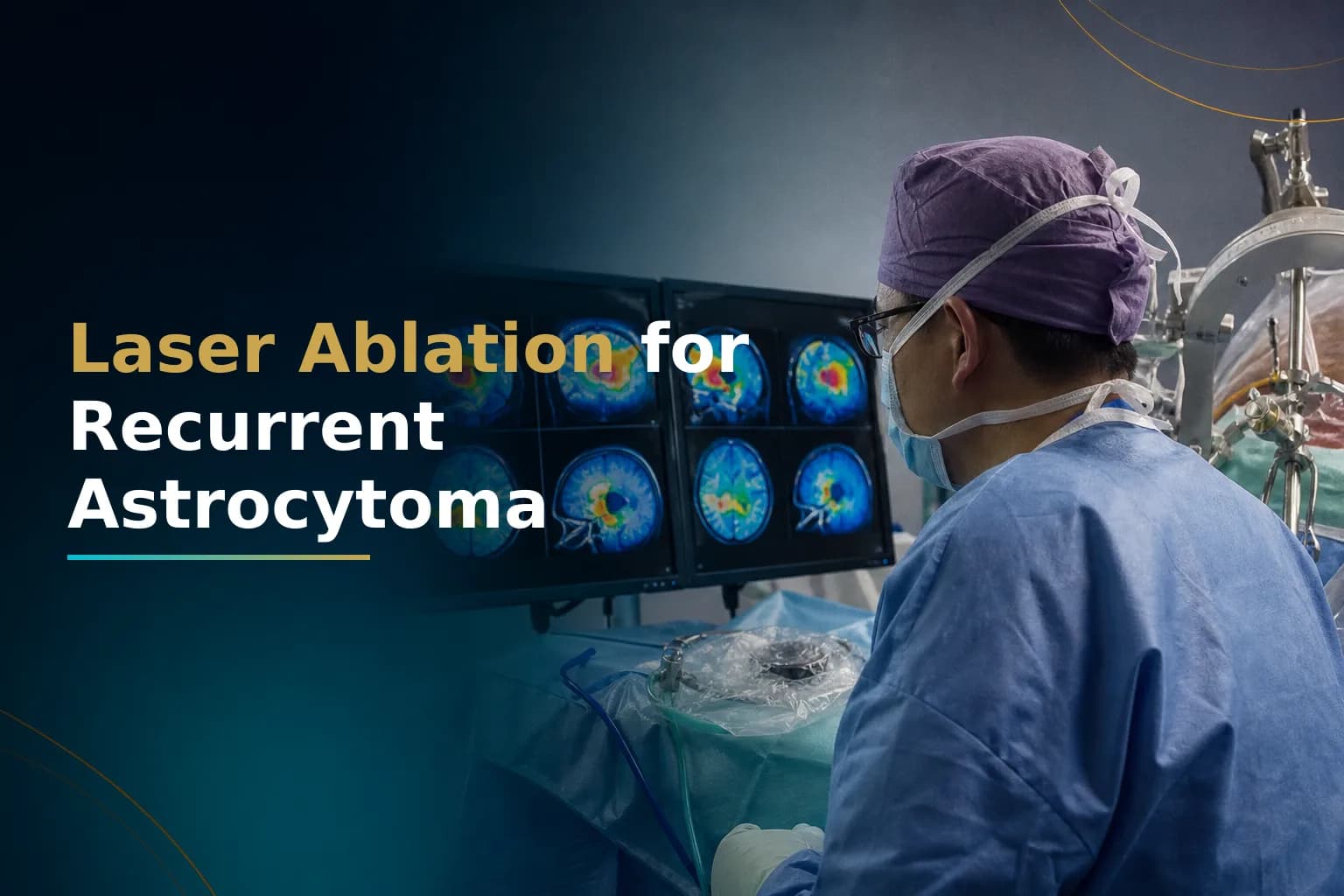
The key difference with LITT is continuous MRI thermal monitoring. During the procedure, real-time MRI tracks how heat spreads through the brain. The surgical team watches color-coded temperature maps and can adjust or pause the laser at any moment. This real-time control protects nearby structures the team wants to save.
The procedure uses general anesthesia. Most patients stay in the hospital overnight and go home with just a small incision to heal. Recovery is faster than after traditional open surgery.
Why LITT Is Relevant at Recurrence
Doctors developed LITT partly to treat tumors in deep or sensitive brain areas where traditional surgery risks permanent neurological damage. The thalamus, insula, motor cortex, and speech regions are examples. Open surgery in these areas can cause deficits that seriously hurt quality of life.
At recurrence, these concerns matter more. A prior surgery may have already brought the resection close to a functional area. Prior radiation changes how the tissue responds. For some patients, the risk of a second surgery is greater than the expected benefit.
A multicenter study of 34 patients with hard-to-reach high-grade gliomas (10 with anaplastic astrocytoma) showed that doctors could use LITT for recurrent disease in challenging locations, as shown in a peer-reviewed multicenter analysis of LITT in high-grade gliomas. Another preliminary report looked at LITT specifically in grade II and III IDH-mutant gliomas and found the procedure was technically possible and might help control local tumor growth in this molecular subgroup, as noted in a literature review of LITT in IDH-mutant gliomas.
Before choosing any salvage procedure, know your molecular profile. IDH mutation status, MGMT methylation, and other markers affect your expected outcomes and which systemic therapy works best. Our overview of IDH-mutant glioma versus glioblastoma explains how these differences affect treatment planning at each stage.
How LITT May Improve Chemotherapy Delivery
A key potential benefit of LITT in the recurrent setting is how it affects the blood-brain barrier (BBB). Normally, the BBB tightly controls what enters the brain. Many chemotherapy drugs can't cross it well enough to reach tumor cells in therapeutic doses. That's a big reason chemotherapy is less effective for brain tumors than for cancers elsewhere in the body.
Research in Neuro-Oncology Advances found that LITT breaks down both the BBB and the blood-tumor barrier (BTB) in the area around the ablation zone. This increased permeability may last up to 30 days after treatment. During this time, chemotherapy drugs can reach brain tissue near the treatment site in higher concentrations than normal.
This suggests a practical strategy: use LITT to ablate the tumor, then give salvage chemotherapy while the BBB is temporarily more open. The opening is local, affecting only tissue near the ablation zone, not the entire brain. Large randomized trials haven't confirmed the clinical benefit of this timing specifically for anaplastic astrocytoma. But the biological mechanism is real and guides how clinical trials are being designed.
What the Clinical Evidence Shows
The evidence for LITT in recurrent high-grade glioma is growing but still limited, especially for anaplastic astrocytoma specifically. Most published data come from mixed patient groups that include both grade III and grade IV tumors, so it's hard to know outcomes specific to anaplastic astrocytoma.
A phase II clinical trial, NCT03022578, studied LITT followed by salvage chemotherapy in patients with recurrent glioblastoma or anaplastic astrocytoma. It aimed to measure disease control at six months. The trial closed early due to slow enrollment (a common problem in neuro-oncology), but its design shows the LITT-then-chemotherapy strategy that ongoing studies are still testing.
A 2024 meta-analysis looked at LITT as a first-line intervention in IDH-mutant astrocytoma. It found a tumor ablation rate of about 84.6% in this group, as shown in the published meta-analysis of LITT safety and efficacy. Ablation rate means how much of the targeted tumor volume the laser destroyed during the procedure. It doesn't directly measure long-term tumor control or survival. But destroying most of the visible tumor is usually considered a good technical result for the procedure.
Available data show that tumor size and MGMT methylation status may affect outcomes after LITT, similar to patterns in other salvage treatments. Discuss these factors with your care team when deciding whether LITT is right for you.
Who May Be a Candidate
LITT is not for every patient with recurrent anaplastic astrocytoma. It may help patients with:
- A small, well-defined recurrent lesion. Very large or spreading tumors are hard to cover with a single laser fiber.
- Tumor in a deep or sensitive brain area where open surgery risks serious neurological problems
- Prior treatment effects (like resection or radiation changes) that make a second surgery technically hard or risky
- Confirmed active tumor recurrence, not radiation necrosis or pseudoprogression
That last point is critical before any salvage procedure. Radiation necrosis and pseudoprogression look almost identical to recurrence on standard MRI but need very different treatment. Advanced imaging, perfusion MRI, or sometimes tissue biopsy can show what is actually causing the new or growing lesion. Our article on radiation necrosis versus tumor recurrence explains how doctors approach this diagnostic challenge.
What to Expect: Before, During, and After
Before the procedure, your team reviews your latest imaging and plans the laser fiber path. You'll have standard pre-operative labs and anesthesia evaluation. On the day of the procedure, doctors place you under general anesthesia. They make a small drill hole in the skull and guide the fiber to the tumor along the planned path. Real-time MRI thermal maps guide the team as the laser turns on. Once the target is adequately treated, they remove the fiber and close the incision.
After the procedure, you may have temporary worsening of neurological symptoms from swelling around the ablation zone. This usually peaks in the first few days and doctors usually manage it with corticosteroids. Recovery is faster than after open surgery, and many patients can start systemic therapy within a few weeks.
One thing patients and caregivers should know: post-LITT MRI images can be hard to read. The ablation zone often looks like contrast enhancement that resembles active tumor for weeks or months after the procedure. Your follow-up team needs experienced neuro-radiologists and oncologists who know how to read post-LITT images.
Risks and Limitations Worth Knowing
LITT has real procedural risks you should discuss with your surgical team:
- Neurological deficits if thermal spread reaches nearby functional tissue
- Peritumoral swelling that may temporarily worsen existing symptoms
- Incomplete ablation if the tumor extends beyond the effective reach of the laser fiber
- Small risk of bleeding or infection at the insertion site
LITT destroys tumor tissue in place rather than removing it, so dead tissue stays and is gradually reabsorbed over time. This is different from open surgery, where the surgeon removes the tumor directly. It changes how follow-up imaging looks and can make it harder to assess treatment response early on.
LITT is also a local treatment by design. Anaplastic astrocytoma is infiltrative, meaning tumor cells spread into brain tissue beyond what imaging can show. LITT targets the visible lesion but doesn't treat microscopic disease at the edges. That's why it works best as part of a broader strategy that also includes systemic therapy.
Fitting LITT into a Broader Salvage Strategy
LITT works best as one part of a multimodal approach: ablation to shrink the visible tumor, followed by chemotherapy or other drugs to address leftover disease. Many published protocols start chemotherapy within a few weeks after LITT to overlap with the period of increased BBB permeability. But doctors haven't standardized optimal sequencing yet, and timing varies by center and by the drugs being used.
If your care team mentions LITT, ask which systemic therapy they plan after the procedure, when they plan to give it, and whether any open clinical trials at your institution use LITT in their protocol. Our guide to choosing a clinical trial for anaplastic astrocytoma explains how to match your tumor's molecular profile to open studies, some of which are investigating LITT alongside newer drugs.
When to Talk to Your Doctor
Tell your neuro-oncologist and neurosurgeon about LITT if imaging shows a new or growing lesion in an area where repeat open surgery risks significant neurological problems, or if the tumor is small and well-defined. It's also worth discussing if you've already had standard care and want to know what a procedural option could add before or with your next round of systemic therapy. Ask your team about their experience with LITT, how your tumor's size and molecular profile compare to patient groups that benefited most in published studies, and how they'll interpret post-procedure imaging at follow-up.
This article is for general information and is not a substitute for medical advice. Always consult your oncologist or care team about your specific situation.