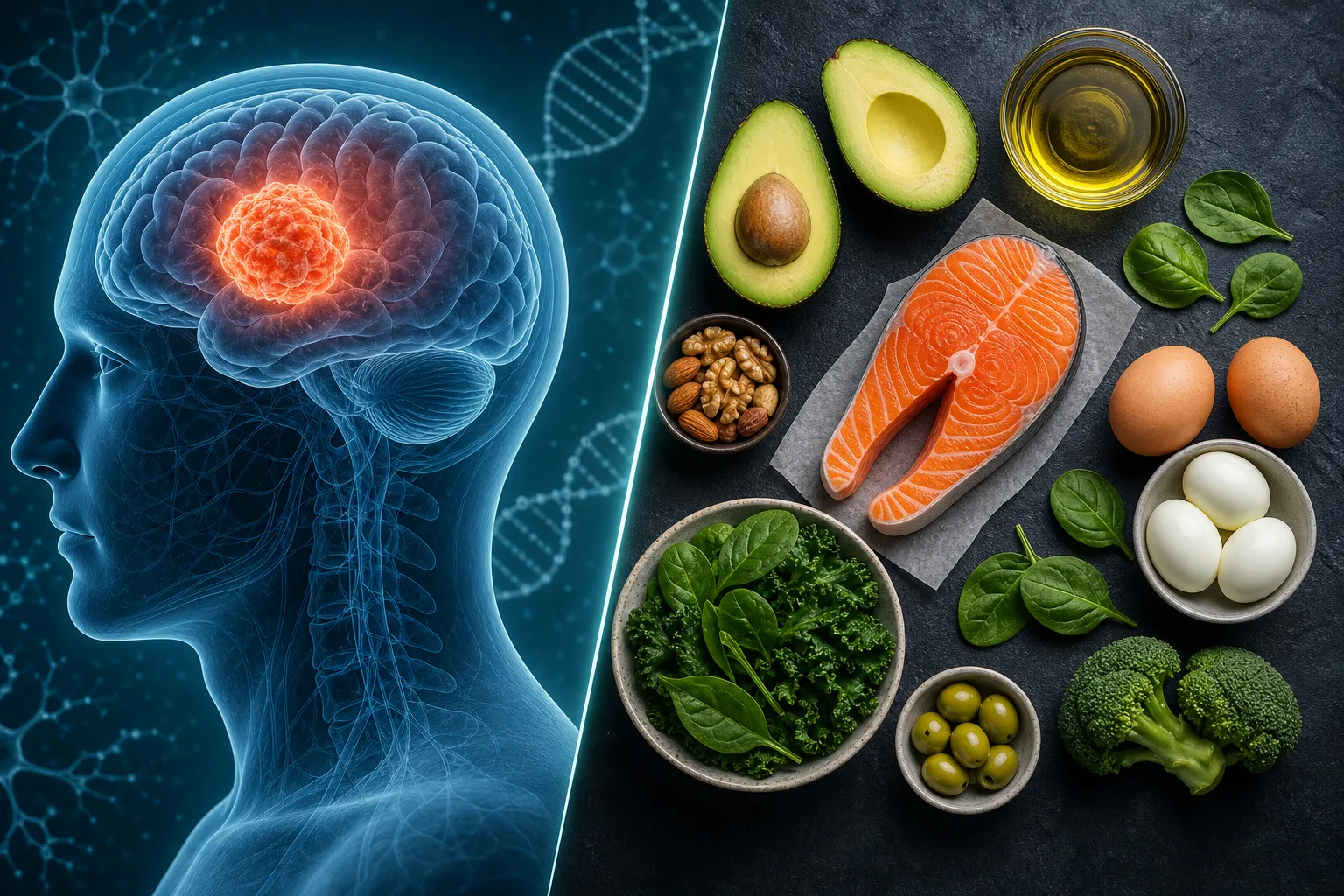
Why Metabolism Matters in Glioblastoma
Glioblastoma (GBM) is the most common and aggressive primary brain tumor in adults. Despite surgery, radiation, and temozolomide chemotherapy, median survival remains approximately 15–20 months and has improved only incrementally over the past several decades. That gap between current outcomes and what patients need has driven intense interest in metabolic approaches — strategies that target how tumor cells use energy, rather than attacking DNA directly.
One of the most investigated of these strategies is the ketogenic diet (KD). It has moved from epilepsy wards into neuro-oncology research units, and it is now the subject of formal clinical trials. Patients and caregivers regularly ask about it. This article explains the biology behind the approach, what the clinical evidence actually shows, and what the remaining questions are.
The Warburg Effect: The Biological Rationale
The case for a ketogenic diet in GBM begins with a fundamental observation about cancer metabolism. In 1924, the biochemist Otto Warburg discovered that tumor cells display high rates of glucose uptake and lactate production even when oxygen is available — a pattern now called the Warburg effect, or aerobic glycolysis. Normal cells prefer a far more efficient pathway called oxidative phosphorylation (OXPHOS). Cancer cells largely bypass it.
In glioblastoma, this metabolic rewiring is prominent. GBM cells rely on aerobic glycolysis to produce ATP and show elevated glucose consumption, rapidly metabolizing glucose into lactate. Higher blood glucose levels have also been associated with worse prognosis in GBM patients. The Warburg effect is not just a side feature — it appears to actively support tumor invasion, immune evasion, and resistance to treatment.
Crucially, glioma cells appear to be metabolically inflexible. Unlike healthy brain cells, which can shift to burning ketone bodies when glucose is scarce, gliomas are considered metabolically inflexible due to impaired mitochondrial function — meaning they struggle to use ketones as a fuel source. This is the theoretical opening that the ketogenic diet is designed to exploit.
What the Ketogenic Diet Actually Does
The ketogenic diet is a high-fat, very-low-carbohydrate nutritional plan. The classical version uses a fat-to-carbohydrate-plus-protein ratio of 4:1 or 3:1 by weight. When carbohydrate intake drops sharply, the liver converts fatty acids into ketone bodies — molecules that can cross the blood-brain barrier and serve as an alternative fuel for healthy neurons and glia.
The proposed mechanisms through which a KD may affect GBM are several:
- Glucose restriction: Lowering blood glucose starves tumor cells that depend on glycolysis for energy and biosynthesis.
- Ketone substitution: Healthy brain cells thrive on ketones; GBM cells may not be able to use them efficiently, creating a metabolic disadvantage for the tumor.
- Insulin and IGF-1 reduction: Lower carbohydrate intake reduces insulin and insulin-like growth factor levels, both of which may promote tumor growth signaling.
- Anti-inflammatory effects: Ketone bodies such as beta-hydroxybutyrate (BHB) may reduce reactive oxygen species and peri-tumoral inflammation.
- Sensitization to standard treatment: Preclinical data suggest the KD may enhance the activity of radiation and chemotherapy in mouse models of glioma, increasing survival in those models.
It is worth noting, however, that metabolism in GBM is more complicated than a simple glucose-dependency story. Some research has found that GBM cells can adapt and use alternative fuel sources, including fatty acids and amino acids, when glucose is restricted. Metabolic plasticity may limit the effect of dietary intervention alone.
What Clinical Trials Have Shown
Translating promising preclinical data into patient benefit is rarely straightforward. Here is a summary of the key human evidence to date.
Early Feasibility Studies
The ERGO trial, an open-label pilot study published in a peer-reviewed journal and registered at ClinicalTrials.gov, examined the feasibility of a ketogenic diet in 20 patients with recurrent glioblastoma. The primary goal was to determine whether patients could tolerate and sustain the diet — not to measure survival. The overall survival observed was approximately 32 weeks, and a trend toward longer progression-free survival was seen in patients who achieved stable ketosis. Authors noted that the study was limited by small numbers, lack of a control group, and the complicating effect of steroid use on blood glucose levels. No severe diet-related adverse events were recorded.
A Phase 1 Safety and Feasibility Trial (2025)
One of the most rigorous recent studies is a phase 1 trial published in Scientific Reports in 2025. Adults with GBM within 3 months of diagnosis followed a supervised 16-week intervention using a 3:1 ketogenic diet alongside standard-of-care chemoradiation. The primary outcome was safety.
The results were encouraging from a tolerability standpoint. All 17 patients met the primary safety objective, with zero instances of excessive weight loss, and 100% of patients maintained nutritional ketosis over more than 50% of study days. The most common side effects were mild loss of appetite and brief flu-like symptoms. No patients stopped the diet due to intolerance. This phase 1 trial was designed to test safety, not to draw conclusions about whether the diet extended survival — that question requires the larger randomized trials now underway.
A 2024–2025 Systematic Review and Meta-Analysis
A 2025 PRISMA-compliant systematic review and meta-analysis pooled data from 41 studies — ranging from randomized pilots to case series — and represents the most comprehensive synthesis to date. Its findings carry important caveats, but they are broadly consistent with earlier reviews.
On survival, adherent cohorts in the review showed a median overall survival of 29.4 months compared to 14.6 months in historical controls. This comparison needs to be interpreted very carefully. Historical controls are not the same as randomized comparators, and selection bias is a major concern — patients who adhere to a demanding dietary intervention for months tend to have better performance status and more support than average GBM patients. The majority of available studies are small, non-randomized, and heterogeneous in design, with variable macronutrient ratios, adherence assessment methods, and endpoints. The review's authors call explicitly for standardized Phase III trials before clinical guidelines can be written.
Molecular Profile May Matter
An emerging area of research explores whether a patient's tumor molecular profile influences how well the KD works. Preliminary data suggest that IDH-mutant and MGMT-methylated tumors may prove more sensitive to metabolic restriction owing to diminished glycolytic flexibility, but this needs validation in adequately powered Phase III randomized trials. If confirmed, this could mean that KD is more relevant for some molecular subtypes than others. For a deeper look at how molecular markers shape GBM treatment strategy, see our article on Understanding Your GBM Molecular Profile: IDH, MGMT, EGFR & Why They Matter.
The Steroid Problem: A Real-World Complication
One of the most significant practical challenges for GBM patients pursuing a ketogenic diet is corticosteroid use. Brain tumors cause swelling (peritumoral edema) that often requires dexamethasone or similar drugs to manage. Steroid use increases blood glucose levels, directly defeating the purpose of the ketogenic diet by keeping circulating glucose elevated even while carbohydrate intake is restricted.
Some clinical trials have specifically excluded patients on high doses of steroids, or required that steroid doses be reduced below a certain threshold before enrollment. This is a meaningful barrier, since edema is common — particularly during and after radiation. A 2024 clinical study did report that when the KD was carefully supervised alongside chemotherapy and corticosteroids, glucose metabolism disruption was not observed, suggesting that tight dietary management may partially offset steroid-related glucose elevation. However, that study was small, and replication in larger trials is needed.
The steroid interaction illustrates a broader point: the ketogenic diet in GBM is not a simple add-on. It requires active management, frequent monitoring of blood glucose and ketone levels, and adjustment for whatever else is happening clinically.
Other Practical Challenges
Beyond steroids, there are several other real-world considerations for GBM patients who want to explore the ketogenic diet:
- Nutritional adequacy during treatment: Chemoradiation causes fatigue, nausea, and appetite loss. Maintaining a strict dietary protocol on top of these symptoms is demanding. Supervised dietary support from a registered dietitian is strongly recommended by every trial that has studied this approach.
- Weight and muscle preservation: GBM patients often already face weight loss risk. A ketogenic diet that is not carefully designed can accelerate unintended weight loss or muscle wasting. Patients with low BMI are generally excluded from trials for this reason.
- Contraindications: The KD is not appropriate for everyone. Patients with inherited metabolic disorders affecting lipid metabolism, severe cardiovascular or renal disease, or very low body weight are typically excluded from trials and require individualized assessment.
- Adherence burden: The diet requires significant planning, label reading, and lifestyle adjustment. Social meals, hospital food, and treatment-related fatigue all create adherence challenges. Trials have found that with structured dietitian support, adherence is achievable — but that level of support is not uniformly available outside a research setting.
Where the Evidence Falls Short
It is important to be honest about what the current evidence cannot yet tell us:
- There are no completed large, randomized Phase III trials comparing KD plus standard of care to standard of care alone in GBM. These are in progress, including a randomized phase II study at UCSF testing KD against standard dietary guidance in newly diagnosed GBM.
- Most human studies have been small, single-arm, and short-duration. Observational survival signals, while interesting, cannot rule out selection bias.
- The optimal form of the diet — classic KD, modified Atkins, calorie-restricted KD, medium-chain triglyceride variants — has not been determined. Different studies use different protocols, making comparison difficult.
- The KD should not replace standard-of-care treatment. Surgery, radiation, and temozolomide remain the established backbone of GBM therapy. The KD is being studied as an adjunct — something added alongside standard treatment, not instead of it.
For those interested in how the KD fits into a broader integrative strategy, our overview of Integrative Treatments for Glioblastoma: Evidence-Based Complementary Therapies That May Help covers the wider landscape, including HBOT, curcumin, and other adjunct approaches under investigation.
How the KD Fits Within a Precision Strategy
The most promising framing for the ketogenic diet in GBM is not as a standalone therapy, but as one component of a multi-pronged metabolic strategy. Researchers and some clinical programs are exploring whether combining the KD with other metabolic interventions — such as repurposed drugs that target glycolysis — might produce synergistic effects. The underlying logic is that GBM's metabolic plasticity means a single approach may not be sufficient; stacking metabolic pressures from multiple directions may be needed to limit a tumor's ability to adapt.
This precision framing also means that the KD may not be equally useful for every GBM patient. Tumor subtype, molecular markers, steroid dependence, nutritional status, and treatment phase all likely influence whether and how well dietary ketosis can be sustained and whether it translates into meaningful biological effects. As the field matures, matching the right metabolic strategy to the right patient profile will be key. You can also explore emerging combination and drug repurposing approaches in our article on Tamoxifen and Glioblastoma: What Patients Should Know About This Repurposed Drug.
The Bottom Line on Current Evidence
The ketogenic diet has a solid biological rationale in GBM, a reasonable safety profile in supervised clinical settings, and early human data that are intriguing — but not yet practice-changing. It is not a cure. It is not a replacement for chemotherapy or radiation. But it is a scientifically grounded area of active investigation, and patients who are interested in it are not pursuing a fringe idea — they are engaging with real research.
The field now needs large, randomized controlled trials to determine whether the survival signal seen in observational data holds up under rigorous testing, and to identify which patients are most likely to benefit. Several such trials are underway.
When to Talk to Your Doctor
If you are considering a ketogenic diet alongside your GBM treatment, speak with your neuro-oncologist and a registered dietitian who has oncology experience before making any changes. Key questions to discuss include your current steroid dose, your nutritional status and BMI, your molecular profile, and whether any ongoing clinical trials may be relevant. Do not stop or modify standard treatment without your care team's guidance.
This article is for general information and is not a substitute for medical advice. Always consult your oncologist or care team about your specific situation.