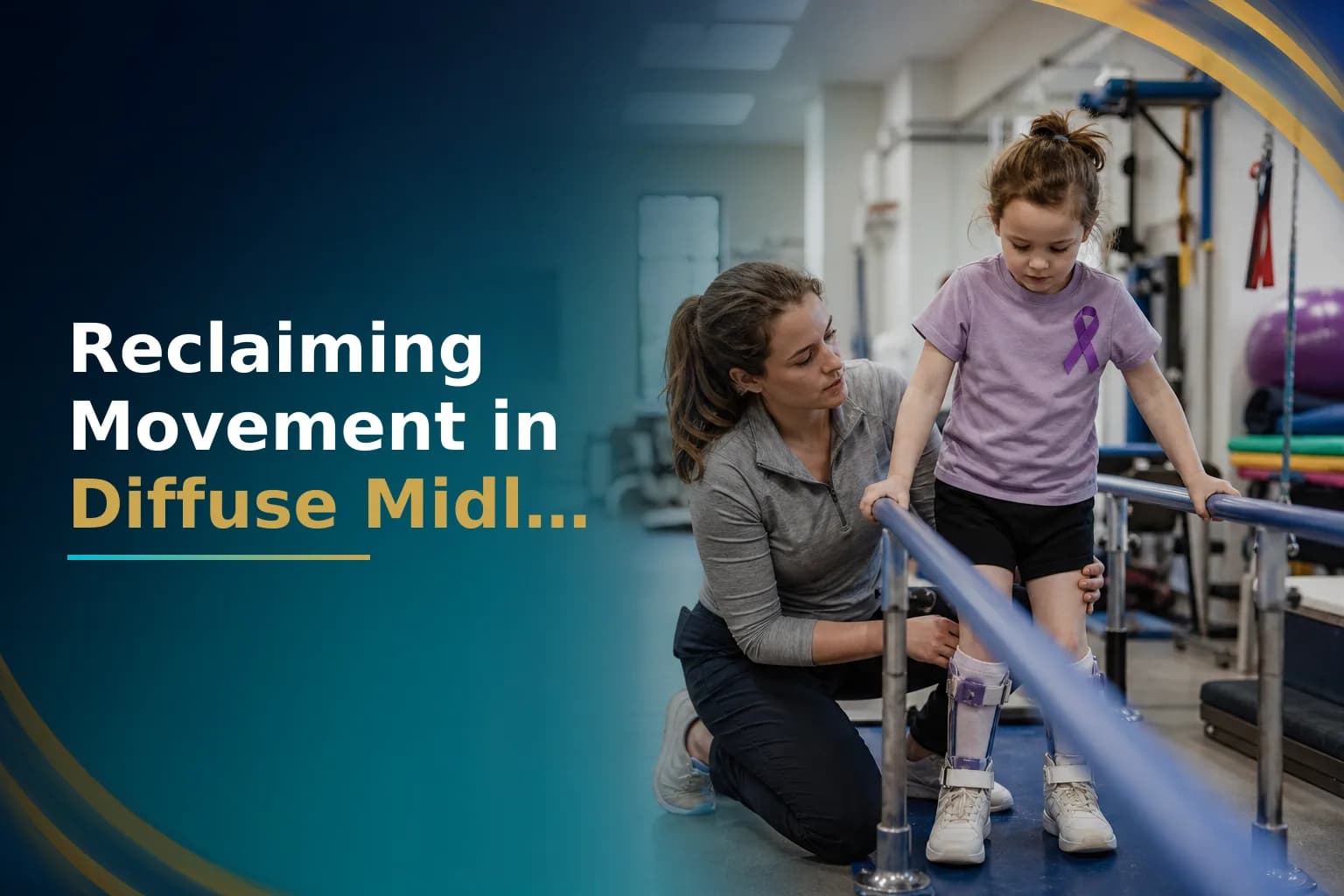
What Is Ataxia, and Why Does It Happen in Diffuse Midline Glioma?
Diffuse midline glioma (DMG) is an aggressive brain tumor in the brain's central structures: the brainstem, thalamus, spinal cord, and nearby areas. These structures control most of the body's movement signals, so when the tumor grows, it disrupts movement in ways that are both expected and difficult.
Ataxia means loss of muscle coordination. It's not just weakness. Your child's brain has trouble controlling the small adjustments needed to walk, reach for things, or hold their head upright. This causes a stumbling walk, a wide stance, trembling hands, and trouble with balance.
Families often notice ataxia and other movement problems early on, sometimes before the diagnosis is confirmed. Understanding why these changes happen and what a rehabilitation team can do helps caregivers plan for daily life and set important goals.
How Tumor Location Drives Movement Problems
The location of a DMG determines which movement functions break down first. According to the American Brain Tumor Association, the two most common locations are the pons (the lower brainstem) and the thalamus. Spinal cord DMG is less common. Each location causes a different pattern of movement problems.
Pontine DMG (also called DIPG). The pons is a relay hub for almost every movement message between the brain and the body. It also controls balance signals from the inner ear and cerebellum. The ABTA notes that DMG in the pons usually causes three overlapping problems: weakness in the facial and eye muscles (cranial nerve palsies), stiffness or weakness in the limbs, and loss of balance and coordination. Because the pons is tightly packed with nerve fibers, even a small tumor can cause major movement changes quickly.
Thalamic DMG. The thalamus is a relay station between the body and the brain for both sensation and movement. When DMG grows in the thalamus, children often experience weakness on one side of the body, strange sensations, and sometimes tremor or involuntary movements. Balance problems in thalamic DMG may come from disrupted sensory signals rather than damage to the cerebellum.
Spinal cord DMG. Spinal DMG causes a different pattern: progressive leg weakness, trouble coordinating the lower limbs, and sometimes bladder or bowel problems. The rehabilitation approaches that work for brainstem and thalamic DMG apply to the spinal form as well.
Types of Movement Problems Your Child May Experience
Movement disorders in DMG usually involve multiple overlapping problems that change as the disease progresses. According to the National Brain Tumor Society, the most common motor symptoms in DMG are trouble walking, balance problems, and weakness in the arms or legs.
- Cerebellar ataxia: A wide-based, lurching walk; trouble reaching for objects accurately; head tremor. This happens when the tumor disrupts pathways between the brainstem and cerebellum.
- Spasticity: Increased muscle stiffness that makes limbs feel rigid. Spasticity is common in pontine DMG because the tumor presses on or invades the corticospinal tract, the main pathway for voluntary movement from the brain to the muscles.
- Hemiparesis: Weakness on one side of the body (one arm or leg). This is more common with thalamic DMG or when a pontine tumor grows unevenly.
- Dysmetria: Trouble judging how far or fast to reach or step. Your child may overshoot a cup, miss a step, or reach past what they're aiming for.
- Dysdiadochokinesia: Trouble doing rapid alternating movements like patting or flipping the hand. This shows disrupted cerebellar timing and is often an early sign of cerebellar pathway problems.
- Cranial nerve-related motor problems: Weakness in facial muscles, trouble swallowing, and trouble controlling eye movements all affect safety and daily function. These problems are especially common in pontine DMG because the pons contains the nerve centers for cranial nerves V through VIII.
These problems don't all happen at once. Early on, a child may need only a little support when walking. As the tumor grows into more tissue, the child usually needs more help with walking and daily activities.
How Quickly Do Balance Problems Progress?
DMG is an aggressive tumor, and movement problems can worsen within weeks to months depending on where the tumor is growing and how it responds to treatment. Radiation therapy, the current standard treatment, can reduce swelling from the tumor and may temporarily improve movement in some children. This window of improvement is a good time for focused rehabilitation.
Research on children with brain injury and tumors in the back of the brain shows that balance and coordination problems can last long after initial treatment, affecting how much a child can participate in school, play, and daily routines. A scoping review of physical rehabilitation for children with acquired brain injury, published in Frontiers in Neurology, found that movement problems in these children — including ataxia and walking abnormalities — improved with structured rehabilitation. While DMG has a different outlook than many survivable pediatric brain tumors, the rehabilitation techniques for cerebellar and brainstem injury in children apply directly.
It's also worth knowing that steroid medications used to reduce brain swelling can cause their own movement side effects, including weakness in the shoulders and hips and fatigue. These effects may add to the movement problems your child already has from the tumor. Your rehabilitation team will take this into account when setting goals.
What Physical Rehabilitation Can Do — and What It Cannot
Physical rehabilitation doesn't slow or stop the tumor. It doesn't replace radiation or other cancer treatments. What it does do is preserve function, reduce problems from immobility, improve safety, and improve quality of life for your child and family during and after treatment.
A systematic review of exercise and physical activity in pediatric brain tumor survivors, published in Pediatric Blood and Cancer, found good effects on balance, strength, and functional movement across the studies reviewed. Though much of the evidence comes from long-term survivors of medulloblastoma and other tumor types, the rehabilitation techniques transfer well to children with DMG.
Rehabilitation works in two main ways. First, compensatory strategies: teaching the brain and body alternative movement patterns that work around damaged circuits. Second, neuroplasticity: intensive, repeated practice may help healthy tissue nearby take on new movement roles, especially in younger children whose nervous systems can adapt more.
Physical Therapy: Rebuilding Movement From the Ground Up
A pediatric physical therapist with neurology training will first assess your child's baseline balance, strength, walking, and coordination. The evaluation involves watching your child stand, walk, climb stairs, and reach for objects, along with standard age-appropriate balance tests. From that baseline, the therapist builds a goal-focused program.
Common treatment elements include:
- Gait training: Structured walking practice on different surfaces — level ground, carpet, uneven terrain — with or without walking aids. The goal is a safe, functional walking pattern that lowers fall risk.
- Balance training on unstable surfaces: Foam pads, balance boards, and practice with unexpected shifts in position help the body learn to react faster and more accurately.
- Progressive strength exercises: Targeted strengthening of the core, hips, and ankles builds the stable base upright movement needs.
- Stretching and range-of-motion work: Spasticity, if ignored, stiffens joints over time. Regular stretching and positioning prevent contractures — permanent shortening of muscles and tendons that further limit movement.
- Transfer training: Safe techniques for moving between bed, wheelchair, and upright positions, which caregivers learn alongside their child to prevent injury.
- Water and treadmill therapy: Water and body-weight-supported treadmill training let children with significant weakness practice normal movement with less fall risk and less effort.
Newer approaches may also help. Research published in Frontiers in Neurology found that virtual reality treadmill training combined with standard physical therapy improved walking patterns, balance, and gait steadiness in teenagers with ataxia from acquired brain injury. These programs aren't widely available but are offered at some academic pediatric rehabilitation centers and are being actively studied.
Occupational Therapy: Keeping Daily Life Possible
While physical therapy targets large movement, occupational therapy (OT) focuses on fine hand control and everyday tasks — eating, dressing, writing, using technology, and going to school.
For a child with DMG, OT goals may include:
- Improving hand coordination for eating when arm tremor is present, using special utensils and practice
- Teaching one-handed or adaptive dressing techniques when one side is weaker
- Splinting or positioning to manage stiffness in the hands and arms and prevent shortening
- Home and classroom changes — grab bars, non-slip surfaces, adapted seating — that reduce fall risk and support independence
- Energy conservation techniques so your child can do important activities despite neurological fatigue
Occupational therapists also work directly with school teams to set up formal academic accommodations under an individualized education plan (IEP) or 504 plan, helping your child stay as engaged academically and socially as possible. It's worth asking for this help early, before school becomes a problem.
Speech-Language Therapy: When Swallowing and Communication Are Affected
Pontine DMG frequently affects the cranial nerves that control swallowing, voice, and speech clarity. Dysphagia — trouble swallowing — is a serious safety concern because food or liquid can enter the airway (aspiration), which can cause pneumonia.
Speech-language therapy can assess swallowing safety through a bedside exam or a modified barium swallow study, recommend appropriate food and liquid textures, teach swallowing strategies to reduce aspiration risk, and support communication when speech becomes unclear. This may include augmentative and alternative communication (AAC) devices when needed. Catching and treating swallowing problems early is much safer than waiting for a medical emergency.
Inpatient vs. Outpatient Rehabilitation: What to Expect
The right rehabilitation setting depends on how quickly your child's function has changed and how much medical support they need. Inpatient rehabilitation — a stay in a dedicated rehab unit — provides intensive therapy, usually three or more hours per day of combined physical, occupational, and speech therapy, with nursing and medical care 24/7. This is appropriate after a rapid loss of function or when safe movement requires continuous monitoring.
Research shows that children receiving inpatient rehabilitation after brain tumor treatment made meaningful functional gains, including improvements in movement tasks and daily activities. For children with DMG who have experienced rapid movement loss — whether from disease or radiation-related swelling — inpatient programs can address these changes in an intensive, structured way.
Outpatient therapy — usually one to three sessions per week at a pediatric rehabilitation clinic — works for children who are medically stable and can handle travel and shorter sessions. Home-based therapy is sometimes available when fatigue or transportation makes clinic visits difficult. The right intensity and setting will change as your child's condition evolves, and your neuro-oncology team should check rehabilitation needs at each visit.
What Families Can Do Between Therapy Sessions
Rehabilitation works best when therapeutic activity continues beyond scheduled clinic hours. The following types of strategies are commonly included in home programs — though every plan should be developed by your child's therapists based on their specific problems, fatigue level, and safety:
- Short daily walks with supervision on familiar, safe surfaces to maintain walking patterns
- Seated balance and strength exercises for children who cannot safely stand alone
- Play-based activities that challenge hand coordination and weight-shifting in a safe environment
- Positioning schedules and pressure checks if wheelchair use increases
- Caregiver training in safe transfer techniques and fall prevention in the home
Neurological fatigue in DMG is different from ordinary tiredness. It reflects the huge effort the damaged nervous system uses to complete any movement task. Therapy sessions and home activities should be spaced to allow adequate rest, and therapists will help set the right intensity so fatigue doesn't erase gains made in the clinic.
Connecting the Pieces: Molecular Markers, Radiation, and Rehabilitation
Understanding your child's full treatment plan helps you advocate better at every care visit. Most DMG tumors carry the H3K27M mutation, which defines the tumor's biology and informs prognosis and emerging precision treatment options. For families choosing radiation, proton therapy is an option at some centers to deliver radiation to the brainstem with greater precision — a factor that affects how much surrounding tissue, including movement pathways, is exposed to radiation. If your child also has cognitive challenges alongside movement problems, the guidance on cognitive changes and learning problems in pediatric brain tumor treatment offers practical strategies that apply across pediatric brain tumor diagnoses.
When to Talk to Your Doctor
Contact your child's neuro-oncology team or care coordinator right away if you notice sudden worsening of balance or limb strength, new trouble swallowing or speaking, increased falls, a change in speech clarity, or a new inability to do tasks your child could manage a week ago. These changes may signal tumor growth, radiation-related swelling, steroid side effects, or another medical problem — all needing evaluation before rehabilitation is adjusted. If your child's hospital hasn't offered a referral to a pediatric physiatrist or neuro-rehabilitation specialist, ask for one directly. Families sometimes need to request this themselves.
This article is for general information and is not a substitute for medical advice. Always consult your oncologist or care team about your specific situation.