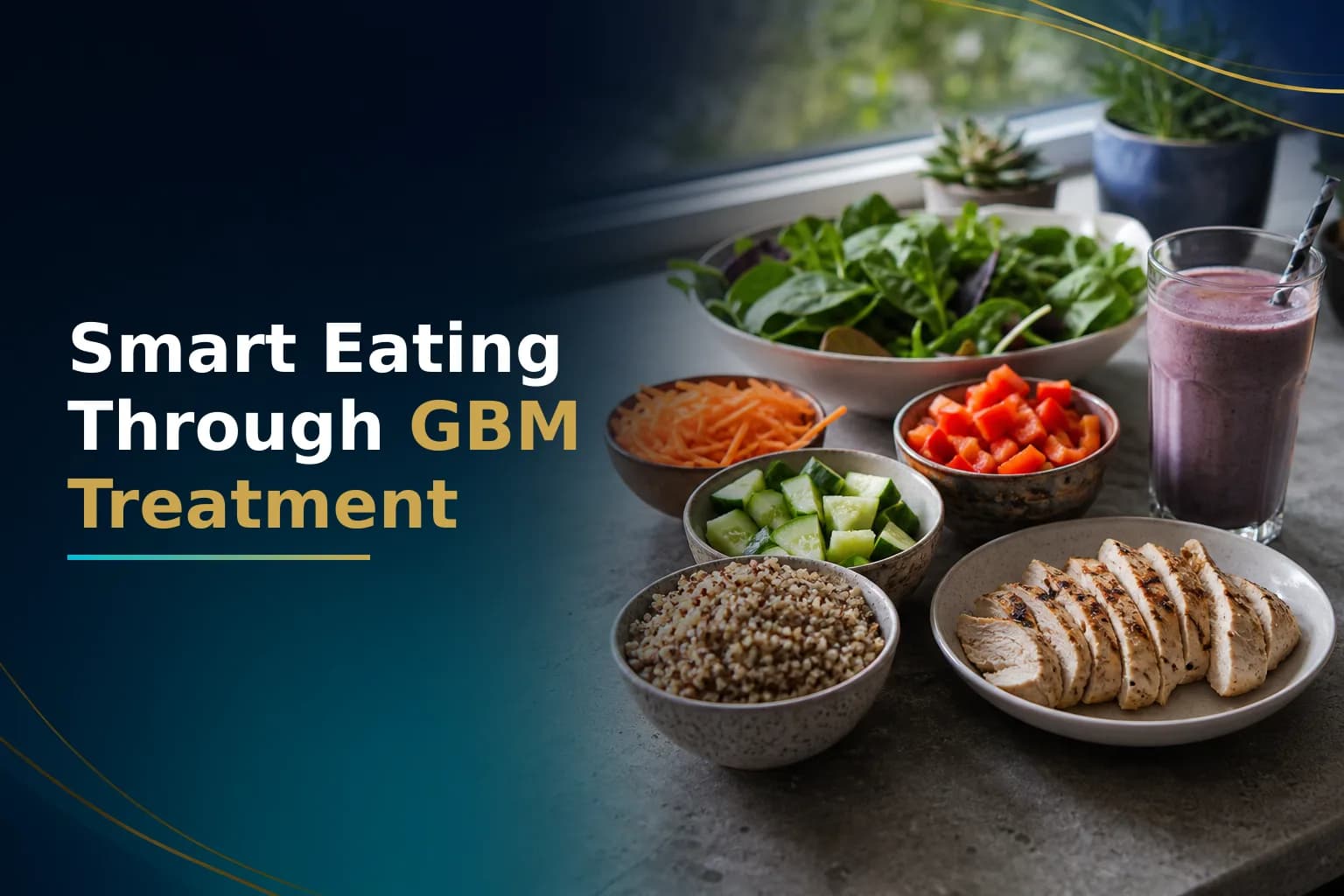
Managing Nutrition During Glioblastoma Treatment
Food may be the last thing on your mind after a glioblastoma diagnosis. But what you eat during treatment directly affects your ability to tolerate chemotherapy, handle steroid side effects, and maintain strength through months of active therapy. This is not about eating perfectly. It is about keeping your body functional under serious stress.
What Should a Glioblastoma Patient Eat During Treatment?
Prioritize protein-rich, calorie-dense foods in small, frequent meals. Aim for around 1 to 1.5 grams of protein per kilogram of body weight daily, per NCI clinical nutrition guidance. Include non-starchy vegetables, whole grains, and healthy fats. Adjust what you eat as side effects change throughout each treatment phase. A registered oncology dietitian can personalize this for your specific situation much better than any generic plan.
Why Nutrition Gets Harder During GBM Treatment
The standard treatment for newly diagnosed glioblastoma combines six weeks of daily radiation with temozolomide chemotherapy, followed by six monthly cycles of temozolomide alone. Most patients also take dexamethasone - a corticosteroid - to reduce brain swelling. Each component of this regimen changes your relationship with food in a different way.
Radiation to the brain causes fatigue, nausea, and headaches that reduce the desire to eat. Temozolomide often causes nausea, vomiting, and reduced appetite, particularly in the first few days of each cycle. Dexamethasone does something unusual: it can increase appetite in the short term while simultaneously raising blood sugar, promoting fluid retention, and driving fat accumulation even as muscle loss happens underneath.
This means a patient who may feel hungry yet gains the wrong kind of weight, or who loses lean muscle gradually without noticing. According to the National Cancer Institute, maintaining adequate protein and calorie intake during cancer treatment helps the body repair tissue, support immune function, and sustain energy for daily activities.
What Dexamethasone Does to Your Eating Patterns
Dexamethasone (often shortened to dex) reduces inflammation and brain swelling caused by the tumor or its treatment. It is one of the most commonly prescribed medications in GBM management. But its metabolic effects create nutritional challenges that many patients aren't warned about beforehand.
The steroid raises blood glucose by promoting sugar production in the liver and reducing how well insulin works in muscle and fat tissue. For patients without pre-existing diabetes, this can trigger steroid-induced hyperglycemia (high blood sugar). A 2024 pharmacovigilance review of dexamethasone use in brain tumor patients identified hyperglycemia as one of the most common and clinically significant metabolic complications of steroid use in this population.
Dexamethasone also causes muscle wasting over time, even when body weight appears stable or rising. Patients often notice swelling in the face and abdomen while their arms and legs feel gradually weaker. This steroid-related muscle loss makes it harder to complete physiotherapy and can slow recovery between treatment cycles.
For a detailed breakdown of dexamethasone side effects and how tapering is managed in GBM, see our article on dexamethasone during glioblastoma treatment.
Practical nutrition steps while on dexamethasone:
- Reduce refined carbohydrates and sugary drinks, which spike blood sugar quickly.
- Choose complex carbohydrates instead: oats, legumes, sweet potato, and whole-grain bread.
- Prioritize protein at every meal to slow glucose absorption and help preserve muscle mass.
- Limit excess sodium to reduce fluid retention and facial swelling.
- Monitor blood glucose regularly, especially on a higher dexamethasone dose or if you have a history of diabetes or prediabetes.
Managing Appetite Loss From Temozolomide
Temozolomide is an oral chemotherapy taken in 5-day cycles, typically followed by 23 days off. Nausea is the most common eating-related side effect. Most patients take antiemetics (anti-nausea medications) alongside TMZ, which helps considerably but doesn't eliminate the problem for everyone. Taste changes are also common - foods may taste metallic, bland, or simply unpleasant for several days after each cycle begins.
The NCI Eating Hints guide recommends small, frequent meals rather than large ones and eating high-protein foods first when appetite is still present. If solid food is difficult, protein-enriched smoothies, broths, and soups can supply both calories and protein without requiring much digestive effort.
Our article on managing temozolomide side effects during GBM treatment covers appetite loss, nausea, and fatigue in more detail, including timing adjustments that some patients find useful during treatment cycles.
Practical steps for chemo-related appetite loss:
- Eat before nausea peaks. Many patients feel best in the morning on TMZ days.
- Eat every 2 to 3 hours in small amounts, even when not particularly hungry.
- Keep easy-access, protein-rich options ready: Greek yogurt, hard-boiled eggs, nut butter on toast, cottage cheese.
- For taste changes, try cold or room-temperature foods. They typically have less odor and a more neutral flavor.
- Keep food visible and accessible throughout the day. Eating increases when food is easy to reach.
Building a Practical Meal Plan
The American Brain Tumor Association (ABTA) recommends the Balanced Plate Method as a starting framework for brain tumor patients during treatment. Roughly half the plate should contain non-starchy, colorful vegetables. A quarter should hold lean protein. A quarter should contain whole grains or starchy vegetables. Healthy fats from olive oil, avocado, nuts, and seeds round out each meal.
This approach works well when appetite is low because it prioritizes nutrient density over volume. When every bite is a challenge, each one should count.
Protein sources worth rotating through:
- Poultry: chicken or turkey (easy to digest and adaptable in texture)
- Fish: salmon, cod, tuna, or sardines
- Eggs and egg whites
- Legumes: lentils, chickpeas, black beans, edamame
- Dairy: Greek yogurt, cottage cheese, milk, kefir
- Plant proteins: tofu, tempeh
Calorie needs increase during cancer treatment to account for the energy cost of tissue repair, immune activity, and the metabolic demands of treatment. Individual calorie targets depend on body weight, activity level, steroid dose, and where you are in the treatment cycle. Ask the oncology team for a formal nutrition referral to get a personalized target based on your current situation - this is one of the most underused resources in GBM care.
Micronutrients, Supplements, and One Key Caution
Micronutrient deficiencies are common during GBM treatment. Reduced food intake means lower intake of vitamins and minerals. Steroid use can gradually deplete calcium, potassium, and vitamin D over months of use. If your care team has not yet assessed micronutrient status, ask for a basic panel covering vitamin D, B12, magnesium, and zinc at your next appointment.
One specific caution applies during radiation therapy. High-dose antioxidant supplements taken at pharmacological doses - well above what food provides - may interfere with the oxidative process through which radiation destroys tumor cells. This concern applies to vitamin C, vitamin E, and beta-carotene in concentrated supplement form. Eating antioxidant-rich fruits and vegetables is fine and likely helps. High-dose antioxidant supplements during active radiation should always be discussed with your radiation oncologist before starting.
Omega-3 fatty acids from fish, flaxseed, and walnuts may help reduce inflammation and preserve muscle mass during chemotherapy. Evidence in GBM specifically is still limited, but omega-3-rich whole foods are a good addition to a balanced diet.
What About the Ketogenic Diet?
The ketogenic diet is one of the most frequently asked-about nutritional topics among GBM patients and caregivers. The biological rationale is plausible: glioblastoma cells rely heavily on glucose for energy, and a very low-carbohydrate, high-fat diet may reduce the fuel available to them while allowing normal brain cells to use ketones instead.
A few clinical trials have tested ketogenic and modified Atkins diets in GBM patients. One phase 2 trial registered at ClinicalTrials.gov evaluated a ketogenic diet alongside standard Stupp protocol treatment. Results to date suggest the diet is feasible and generally safe in motivated patients who receive close dietary support, but evidence of a clear improvement in survival remains preliminary and studies have small sample sizes.
Ketogenic diets are also significantly harder to maintain during active treatment. Nausea, taste changes, and appetite suppression work against the strict carbohydrate limits the diet requires. For patients already losing weight or struggling to reach calorie targets, a strict ketogenic approach may make nutrition worse in the short term rather than improve it.
For a full review of the evidence on ketogenic protocols, fasting, and calorie restriction in GBM, see our dedicated article on metabolic therapy for glioblastoma.
Guidance for Caregivers Managing Meals
In most families, the caregiver handles all food preparation during GBM treatment. This is substantial work, often invisible to others. A few practical strategies that help:
- Batch cook and freeze high-protein soups, stews, and grain dishes so something is always available without extra effort on difficult days.
- Keep easy-access snacks at eye level in the fridge: yogurt, sliced cheese, hard-boiled eggs, pre-cut fruit with nut butter.
- Track meals loosely for a week or two. It helps identify whether the patient is actually meeting protein and calorie targets, particularly when weight is dropping despite an apparently normal appetite.
- Ask the treating team for a referral to an oncology dietitian. Many cancer centers offer this service, and a professional nutrition assessment is far more reliable than general online meal plans not designed for GBM treatment.
If you are coordinating food alongside researching second opinions and adjunct therapies, you are carrying a considerable load. You may want to connect with specialists who can help you understand what a treatment plan involves and which supportive care questions matter most to raise with your oncologist.
When to Talk to Your Doctor
Raise nutrition concerns with your oncologist or care team if:
- The patient is losing weight unexpectedly or rapidly during treatment.
- Blood sugar readings are consistently above target range while on dexamethasone.
- Appetite loss is severe enough that eating feels impossible for more than two consecutive days.
- Nausea is not controlled by the current antiemetic regimen.
- You are considering adding any supplement to the regimen, particularly during active radiation or chemotherapy.
Requesting a nutrition assessment early - ideally before radiation begins - gives you a baseline plan and a professional contact before side effects compound each other.
If you would like a review of the treatment plan and supportive care approach, talk to your medical team about scheduling a case review with a nutrition specialist.
This article is for general information and is not a substitute for medical advice. Always consult your oncologist or care team about your specific situation.