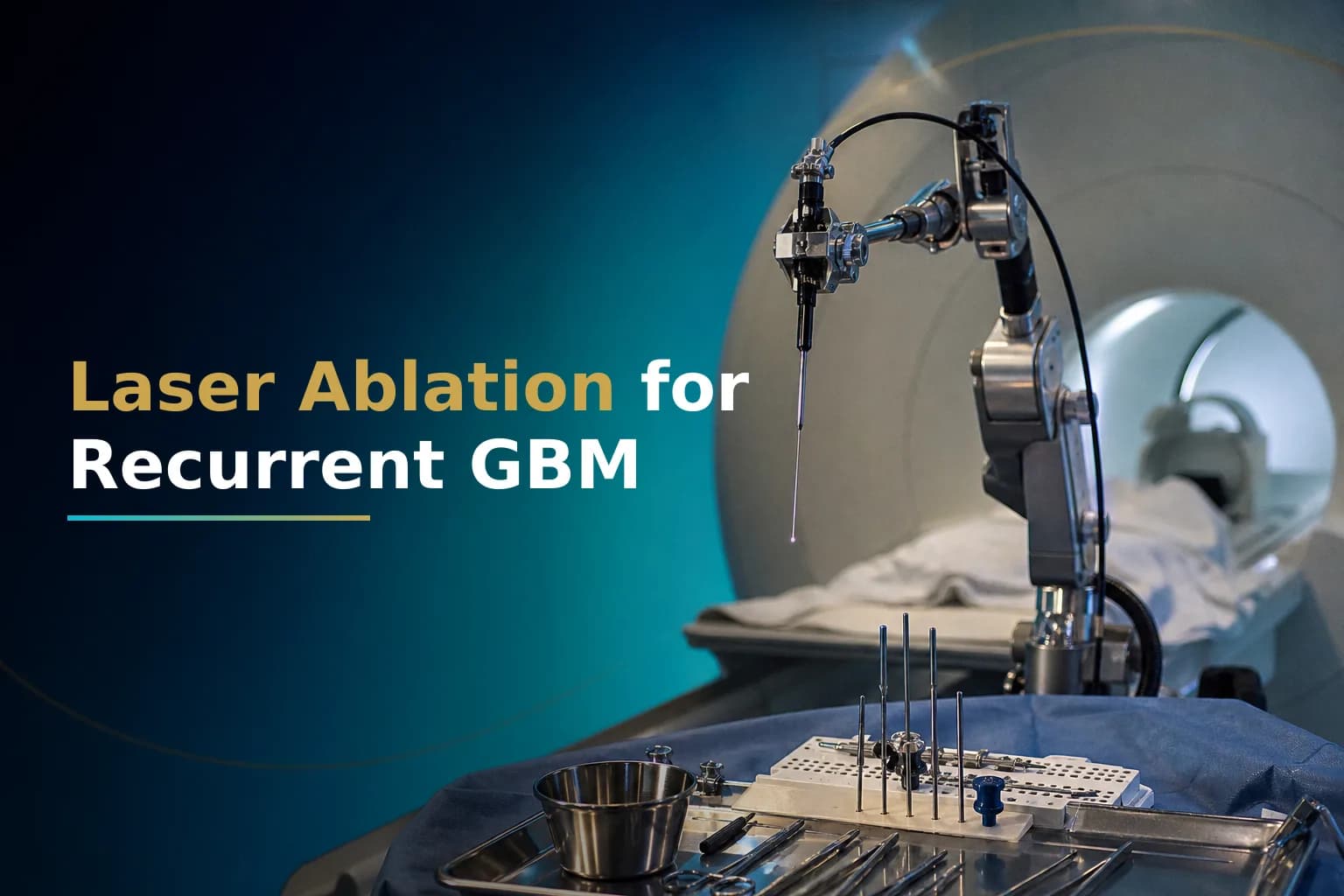
What is laser interstitial thermal therapy for recurrent glioblastoma?
Laser interstitial thermal therapy, also called LITT, uses a thin fiber-optic probe to deliver laser energy directly into a recurrent brain tumor. Heat above roughly 43 degrees Celsius kills glioblastoma cells from the inside. A neurosurgeon guides the probe through a small hole in the skull using real-time MRI heat mapping. Most patients spend one to two days in the hospital, and can resume or restart systemic therapy within two to four weeks of the procedure.
When a tumor recurs in a location where open surgery is too risky or cannot safely reach, LITT offers a way to target tumor tissue with a much smaller surgical opening. This is why neuro-oncology centers at major hospitals are using LITT for recurrent GBM.
How does LITT work?
The procedure uses thermal coagulation - heat that kills tumor cells and disrupts the blood vessels that feed them. The procedure follows several steps:
- A 3.2-millimeter entry hole is made in the skull - far smaller than the opening used in conventional resection.
- A stereotactic navigation system aligns the probe to a pre-planned trajectory through the tumor center.
- Laser energy heats tissue in a controlled zone around the probe tip.
- Real-time MRI thermometry - continuous heat mapping - lets the surgeon monitor the ablation boundary and protect adjacent healthy brain.
- After ablation is complete, the surgeon removes the probe and closes the entry point with a single suture or staple.
In addition to destroying the tumor locally, recent case studies published in peer-reviewed literature suggest LITT may shift the immune environment around the treated tumor. Tissue samples taken after ablation show increased CD8+ T-cell infiltration, a marker of local immune activation, compared with samples taken before treatment. Several active trials listed on ClinicalTrials.gov are testing whether checkpoint inhibitor drugs can amplify that immune shift.
Who qualifies for LITT at recurrence?
Candidacy for LITT depends on tumor size, anatomy, molecular biology, and performance status. These criteria come from published prospective studies and currently enrolling trials. Your neurosurgical team will apply their own clinical judgment, and eligibility is always determined on a case-by-case basis.
- Tumor volume: Smaller tumors work better with complete ablation. Most published protocols cap eligible enhancing tumor volume at roughly 3 to 10 cubic centimeters. In one analysis of the LAANTERN multicenter registry, the largest prospective US dataset on LITT for glioblastoma, tumor volume under 3 cc predicted better survival after the procedure.
- Tumor location: LITT is most often used for deep-seated lesions and tumors near or within eloquent cortex, brain regions that control speech, movement, or vision, where open surgery carries unacceptable neurological risk. Thalamic, basal ganglia, and corpus callosum locations are common examples.
- Performance status: Most published protocols require a Karnofsky Performance Score above 60, meaning the patient can do most daily activities on their own.
- Time since radiation: You need at least three months between the last brain radiation and the LITT procedure. This allows tissue to heal and avoids confusing early radiation changes with the ablation zone on MRI.
- Confirmed recurrence: Many LITT protocols require a biopsy to confirm actual tumor recurrence right before the ablation starts. This matters because pseudoprogression after chemoradiation, changes from treatment that look like tumor growth on MRI, can look identical to real progression without tissue sampling.
Age alone is rarely a strict exclusion. The team considers kidney function, how well you tolerate anesthesia, and expected life span, but older patients in good functional status have undergone LITT in published studies.
What do survival data show for LITT in recurrent GBM?
The most detailed prospective data comes from the LAANTERN registry, which tracked patients treated with MRI-guided laser ablation across 14 US centers. Among 60 patients with recurrent IDH-wildtype glioblastoma, median overall survival after the procedure was approximately 9 months. A systematic review of LITT outcomes from multiple published studies found median overall survival of around 10 months and median progression-free survival of roughly 5 to 6 months for recurrent GBM, which is similar to repeat open surgery in matched patient groups.
Three factors consistently predicted better outcomes after LITT: MGMT promoter methylation, receiving chemotherapy within 12 weeks of the ablation, and smaller tumor volume at the time of treatment. MGMT methylation means the tumor has silenced a DNA repair gene, making glioblastoma cells more responsive to alkylating chemotherapy agents. If your records don't include this result, ask your team to test for it before you discuss recurrence options.
LITT versus repeat open resection
In one matched study, LITT and open surgery gave similar survival when patient and tumor traits were matched. The main differences are in risk and recovery time. LITT generally involves a shorter hospital stay, less disruption to surrounding tissue, and a faster return to systemic therapy. Open resection may remove more tumor when the tumor is accessible and the surgeon can safely remove a large volume of disease, or when a trial needs more tissue than an intraoperative biopsy can provide.
Neither approach is universally better. The choice depends on tumor geometry, location, available surgical expertise, and what comes next in the treatment plan. If your current team does not perform LITT, or you are weighing both options, a second opinion from a center experienced in both techniques is worth your time. The guide to building a second opinion case at GBM recurrence covers how to prepare for that conversation and what to ask.
Combining LITT with other treatments
LITT reduces the local tumor burden and can be combined with systemic therapies. Several combinations are being tested:
- LITT plus lomustine: A multicenter phase II trial (NCT03022578) tested LITT combined with lomustine, an oral alkylating chemotherapy agent, in patients with recurrent GBM or anaplastic astrocytoma.
- LITT plus checkpoint inhibitors: Since LITT seems to shift the immune system around the tumor, researchers are testing whether checkpoint inhibitor drugs can amplify that shift. One trial enrolling patients now (NCT07620548) combines LITT with cemiplimab specifically in recurrent glioblastoma.
- LITT as a bridge to other systemic options: Some centers use LITT to treat a focal recurrence and then restart Tumor Treating Fields or switch to a different chemotherapy. The specific sequencing varies by institution and individual patient status.
Whether a trial combination is available to you depends on your molecular profile, prior therapy history, and current performance status. If you haven't checked trial options at recurrence, the guide to how clinical trials work explains eligibility and how to find trials near you or online.
How to access LITT internationally
LITT requires specific equipment, most commonly the NeuroBlate or Visualase system, plus an intraoperative or peri-operative MRI suite. This technology is concentrated at high-volume academic neurosurgical centers. For patients outside the country where they plan to be treated, access requires three main steps.
Step 1 - Confirm anatomical candidacy before traveling. Send your most recent MRI in DICOM format (the raw digital image files, not printed films or screenshots) along with your full pathology and molecular report to a neurosurgical program that performs LITT. Many major hospitals now review cases remotely. If you are based in the GCC, Africa, or South Asia and want a structured starting point, you can consult the Art of Healing Cancer team on what your treatment options actually look like. They review MRI and pathology remotely and can advise whether your tumor anatomy could make LITT an option before you travel.
Step 2 - Verify center volume and equipment. When you contact a prospective center, ask which LITT system they use, how many brain LITT procedures they perform per year, and whether they have a dedicated intraoperative MRI or a peri-operative workflow. A center doing fewer than 10 LITT cases per year is relatively new to the technique. US academic centers affiliated with NCI-designated cancer programs have the most established LITT programs. India's largest neurosurgical hospitals now offer MRI-guided laser ablation for brain tumors. For international patients from the GCC, East Africa, and South Asia, this is a practical option that offers specialist expertise without US or European private hospital costs.
Step 3 - Plan logistics around the short admission. Since you'll spend only one to two days in the hospital, what happens after discharge matters more than what happens during your stay. Plan to stay near the hospital for five to seven days before traveling home. Doctors typically do post-operative MRI within 24 to 48 hours of the procedure and again at six to eight weeks. After the first week, your surgeon and home oncology team can coordinate follow-up imaging remotely.
What to bring to a LITT evaluation
The center will need current imaging and molecular data before reviewing your case. Gather the following before your first consultation:
- All MRI studies since original diagnosis, in DICOM format on a USB drive or via a secure image-sharing link, with special focus on the scan showing your current recurrence.
- Original pathology report from the first surgery, including WHO grade, IDH status, MGMT methylation result, and TERT promoter status if tested.
- Any comprehensive genomic profiling results from tissue or liquid biopsy.
- A full treatment summary: surgery dates and how much tumor was removed, radiation areas and total dose, chemotherapy cycles and agents used, and any clinical trial participation.
- A current medication list, including antiepileptic drugs and corticosteroids such as dexamethasone.
If your pathology report is from before 2021 or does not include MGMT methylation status, ask for a re-review at a center that does full molecular testing. MGMT status directly influences which chemotherapy will work best after ablation and whether MGMT-targeting trials are available to you.
When to talk to your doctor
Ask your neuro-oncologist or neurosurgeon about LITT if your tumor has recurred in a location that makes repeat open surgery high-risk, if a prior resection left neurological deficits you want to avoid worsening, or if your latest MRI shows a small, focused tumor. Also ask if any trial at your center or nearby combines LITT with immunotherapy or another drug. This might give you more options than LITT alone. If your current team does not perform LITT, request a referral to a center that does, or pursue a second opinion independently before deciding.
To upload your MRI images and treatment records for a remote case review, visit the Glioblastoma Center patient journey page.
This article is for general information and is not a substitute for medical advice. Always consult your oncologist or care team about your specific situation.