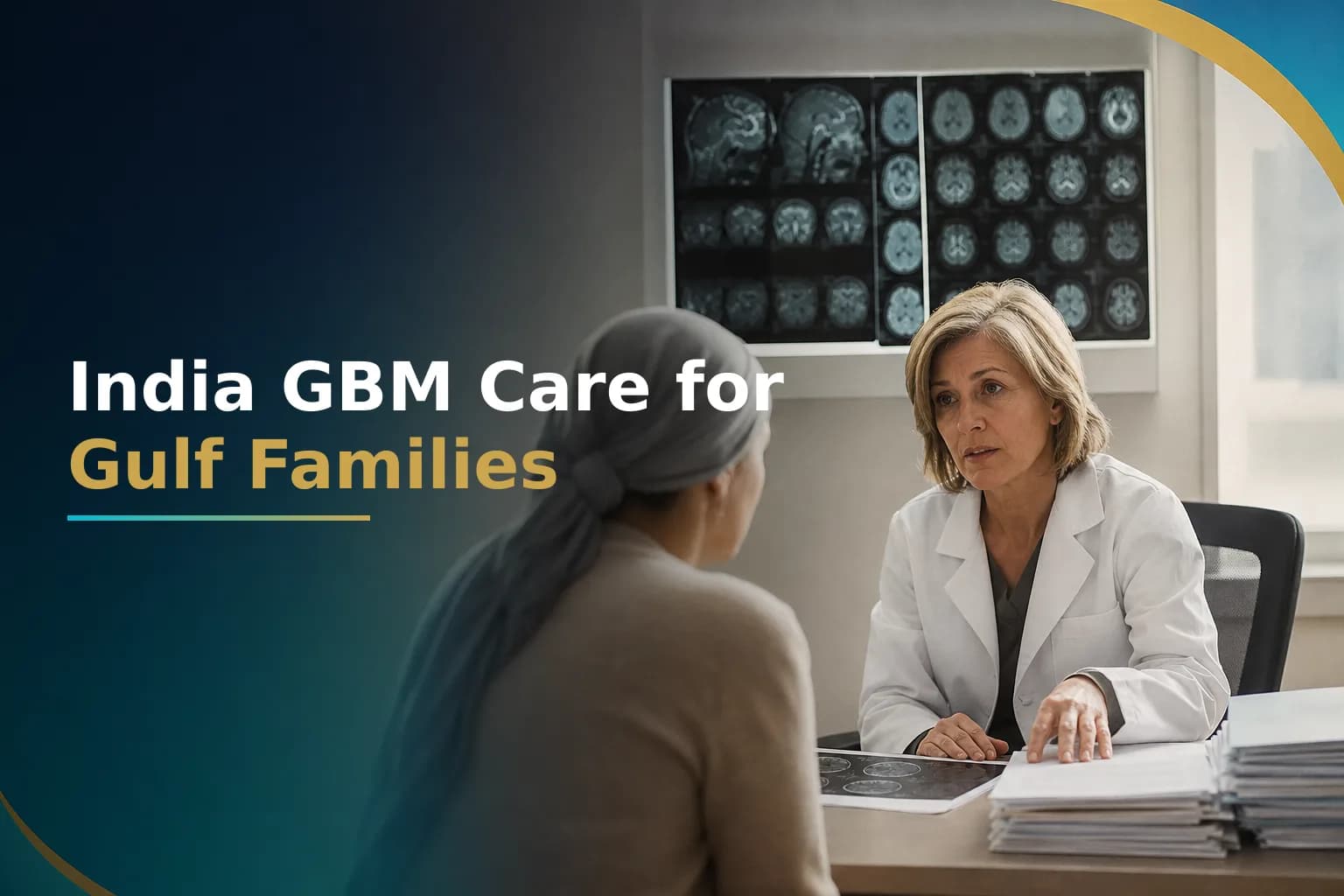
A glioblastoma diagnosis is serious and comes suddenly. You need a clear plan, and you might want treatments not available locally. For families in the UAE and Saudi Arabia, India's specialist neuro-oncology centers offer advanced procedures, molecular profiling, and team reviews - for much less money and closer to home than the US or UK. This guide explains what India's centers offer, how to prepare before you travel, and how to keep care running smoothly across two countries.
Why Families from the UAE and Saudi Arabia Look to India
Both the UAE and Saudi Arabia have built up their cancer treatment infrastructure over the past ten years. Standard care - surgery, radiation, and the chemotherapy drug temozolomide (the three-part combination known as the Stupp protocol) - works for some patients at major hospitals in Dubai, Abu Dhabi, Riyadh, and Jeddah. For some patients, starting treatment locally is the right choice.
But GBM is different. Many families want more than standard care. Some patients want a second surgical opinion before agreeing to a resection plan. Some want advanced surgery techniques such as fluorescence-guided surgery, which uses a drug called 5-ALA to make tumor tissue glow under a specific light, helping surgeons remove more of it safely. Others want access to Tumor Treating Fields (TTFields) - a wearable scalp device that uses low-intensity electric fields to interfere with tumor cell division. Some are looking for open clinical trials not yet running in GCC countries.
India offers all of these. Several large neuro-oncology departments - in Chennai, Bengaluru, Mumbai, Hyderabad, and Delhi - run specialist GBM programs that include molecular pathology review, advanced surgical techniques, and access to TTFields devices. Equivalent care in India costs a fraction of what it would in the US or Europe, and the direct flight from Dubai or Riyadh takes under four hours.
A study tracking medical travel patterns for UAE nationals found that oncology and neurosurgery together accounted for more than a quarter of all overseas treatment cases. Patients and caregivers said procedural expertise and access to specific techniques were the main reasons for traveling. India appears regularly in that data alongside Europe and Thailand, because it has high-volume specialist centers that work in English and have built dedicated international patient services over many years.
What India-Based Centers Can Add to Your Treatment Plan
The Stupp protocol - maximal safe resection followed by six weeks of concurrent radiation and temozolomide, then adjuvant temozolomide cycles - remains the global standard for newly diagnosed GBM, as documented in a systematic review of glioblastoma management across countries. Indian centers use this protocol. They can add value in these areas.
- Molecular profiling at diagnosis. MGMT promoter methylation testing and IDH mutation analysis now guide GBM treatment. MGMT methylation status predicts how well temozolomide will work - patients with a methylated MGMT promoter tend to respond better to alkylating chemotherapy, as confirmed by a study published in BMC Neurology examining inoperable IDH-wildtype glioblastoma. If this testing was not done on your tumor tissue at surgery, asking for comprehensive molecular review in India is one of the most helpful steps you can take. For a plain-language explanation of what these markers mean, see our article on what your glioblastoma pathology report really means.
- Fluorescence-guided surgery. The 5-ALA technique is not available in most Gulf hospitals. If imaging shows a large resectable tumor near important brain tissue, surgical planning at an India-based center with fluorescence guidance may allow for a more complete resection.
- Tumor Treating Fields (TTFields). The EF-14 phase III trial found that adding TTFields to standard temozolomide improved outcomes in newly diagnosed GBM, including in older patient groups, as described in this subgroup analysis of EF-14 data in elderly patients. TTFields devices are available at select Indian centers. Device access outside Western countries varies, and India is one of the more reliable places in this region to obtain and start TTFields therapy.
- Clinical trial access. Several Indian academic medical centers participate in international cancer trials, including immunotherapy and tumor vaccine studies in GBM. If your molecular profile suggests you may qualify for a trial not yet enrolling in your home country, an India-based center may have an open slot worth investigating.
How Do You Start GBM Treatment in India from UAE or Saudi Arabia?
Most families follow a version of this sequence. The exact timeline depends on which center you choose and your clinical situation, but this is a practical framework to work from:
- Remote pre-review first. Share your MRI images, operative or biopsy report, and pathology findings electronically with the India-based center before booking any flights. Most large hospitals have international patient offices that review cases within a few working days and advise whether traveling will help.
- Request a written cost estimate. Ask for a breakdown covering the initial consultation, any new imaging, surgical or radiation procedures, hospital stay, and items such as TTFields hardware if relevant. This gives you a comparison point and provides the documentation your insurer will need for pre-authorization.
- Apply for an Indian e-Medical Visa. UAE and Saudi nationals can apply online through India's official government visa portal. A Medical Attendant visa is available for one companion traveling with the patient. Processing typically takes a few business days, though applying a week or two in advance is sensible, particularly during busy travel periods.
- Compile your complete medical file. The next section lists exactly what to bring.
- Arrange accommodation near the hospital. Most large Indian hospital groups have partner hospitality services or can recommend nearby serviced apartments for families who need to stay for several weeks during radiation.
- Plan for the treatment timeline realistically. Radiation and concurrent temozolomide typically runs for six weeks. If surgery is the first step, allow one to two weeks of post-surgical recovery before radiation begins. Build in at least eight to ten consecutive weeks of availability if you are starting the full Stupp protocol from the beginning.
What Documents and Records to Prepare
Arriving without complete records is one of the most common causes of avoidable delays and repeat testing. Before you travel, gather the following:
- All MRI brain scans on CD or USB in DICOM format, with printed radiological reports. Include pre- and post-operative scans if surgery has already taken place. India-based centers generally prefer digital DICOM files over printed films.
- The original pathology report from the biopsy or surgical specimen. If tissue was processed at a hospital in the UAE or Saudi Arabia, ask whether the paraffin-embedded tissue blocks or unstained slides can also be transferred. Molecular re-testing for MGMT, IDH, 1p/19q codeletion, and TERT promoter mutations may require the actual tissue, not just the printed report.
- Recent blood tests including a full blood count and metabolic panel, ideally from within the past four to six weeks, plus any specialty labs your current oncologist has ordered.
- A summary letter from your current treating physician, written in English, covering the diagnosis, treatment given to date, current medications, and any known allergies.
- Copies of previous radiation treatment plans if radiation has already been given. The India-based radiation oncologist will need the dosimetry data to plan any further treatment safely and avoid re-irradiating tissue that has already received a full dose.
- Passport and visa documents for the patient and companion, plus insurance policy documents and any pre-authorization paperwork you have obtained.
For a detailed walkthrough of the insurance pre-authorization process and the step-by-step Indian Medical Visa application, see our article on insurance pre-approval and medical visa for GBM in India.
What to Expect on Arrival
English is the working clinical language at all large private Indian hospitals. International patient coordinators handle scheduling, billing queries, and day-to-day logistics. Arabic-speaking patient liaisons are available at several centers - confirm this when you first make contact, particularly if the patient communicates better in Arabic than in English.
The first consultation typically involves a review of your imaging and pathology by the neuro-oncology team, a neurological examination of the patient, and a multidisciplinary team meeting that may include the neurosurgeon, neuro-oncologist, and radiation oncologist together. If your tissue requires molecular re-testing or if updated imaging is needed, this is usually arranged within two to three working days of arrival.
If surgery has not yet taken place, the team will want to review the MRI themselves before scheduling an operating room slot. For patients who have already had surgery and are arriving specifically for post-operative chemoradiation, radiation planning and simulation can generally begin within a few days of the initial consultation. The team will assess whether any additional imaging is needed before treatment planning can be finalized.
Keeping Care Coordinated Between Two Countries
A two-country care model works best when both clinical teams communicate regularly and in writing. Before you leave India, ask for a structured discharge summary and a full copy of the treatment plan in English - and in Arabic if the hospital can provide it. Give that documentation directly to your oncologist in Dubai, Abu Dhabi, Riyadh, or wherever you continue local care. Do not rely on the patient or family to verbally relay the treatment plan.
Telemedicine follow-up with the India-based neuro-oncologist is practical for routine MRI reviews, medication questions, and interpretation of blood results. Most large Indian hospital groups now offer video consultation platforms that work reliably across the Gulf region. Scheduling a video review every six to eight weeks during the adjuvant temozolomide phase - the months of oral chemotherapy that follow the radiation - keeps both teams aligned without requiring repeat travel.
If you are still at the stage of assessing whether India helps with what is available locally, you can arrange a remote second opinion through Art of Healing Cancer, which reviews MRI imaging and pathology records remotely and gives you a structured clinical assessment of your options before you commit to any travel plans.
For a broader practical guide to managing GBM care across more than one country - including how to structure handoffs between clinical teams and keep follow-up MRI schedules aligned - see our article on traveling for glioblastoma treatment and coordinating multi-country care.
Questions to Ask an India-Based Neuro-Oncology Team
Walking into a first consultation with a prepared list of questions helps you get specific, real answers rather than general reassurances. Consider asking the following:
- Has your team reviewed my complete imaging and pathology, including all available molecular markers?
- Does my tumor's location and size make it a candidate for more complete resection, and is fluorescence-guided surgery available for this case?
- Is TTFields appropriate for my situation, and can I access the device and ongoing support at this center?
- Are there open clinical trials I might qualify for based on my molecular profile, and what would enrollment require from me?
- How do you manage telemedicine follow-up for patients who return to live in another country after treatment?
- What is the written protocol for communicating treatment updates and MRI results to my treating physician at home?
When to Talk to Your Doctor
If you are considering traveling to India for any part of your GBM treatment - surgery, radiation, molecular review, or access to TTFields - discuss the plan with your current oncologist before you book flights or commit to a timeline. Timing matters in GBM. Radiation generally needs to begin within a defined window after surgery, and unplanned delays can have clinical consequences. Your local team can help you assess whether the time required for international travel fits safely within your specific situation.
If you would like to share your MRI and pathology reports with a specialist team for a remote review of your options, you can upload your records and request a review through Glioblastoma Center.
This article is for general information and is not a substitute for medical advice. Always consult your oncologist or care team about your specific situation.