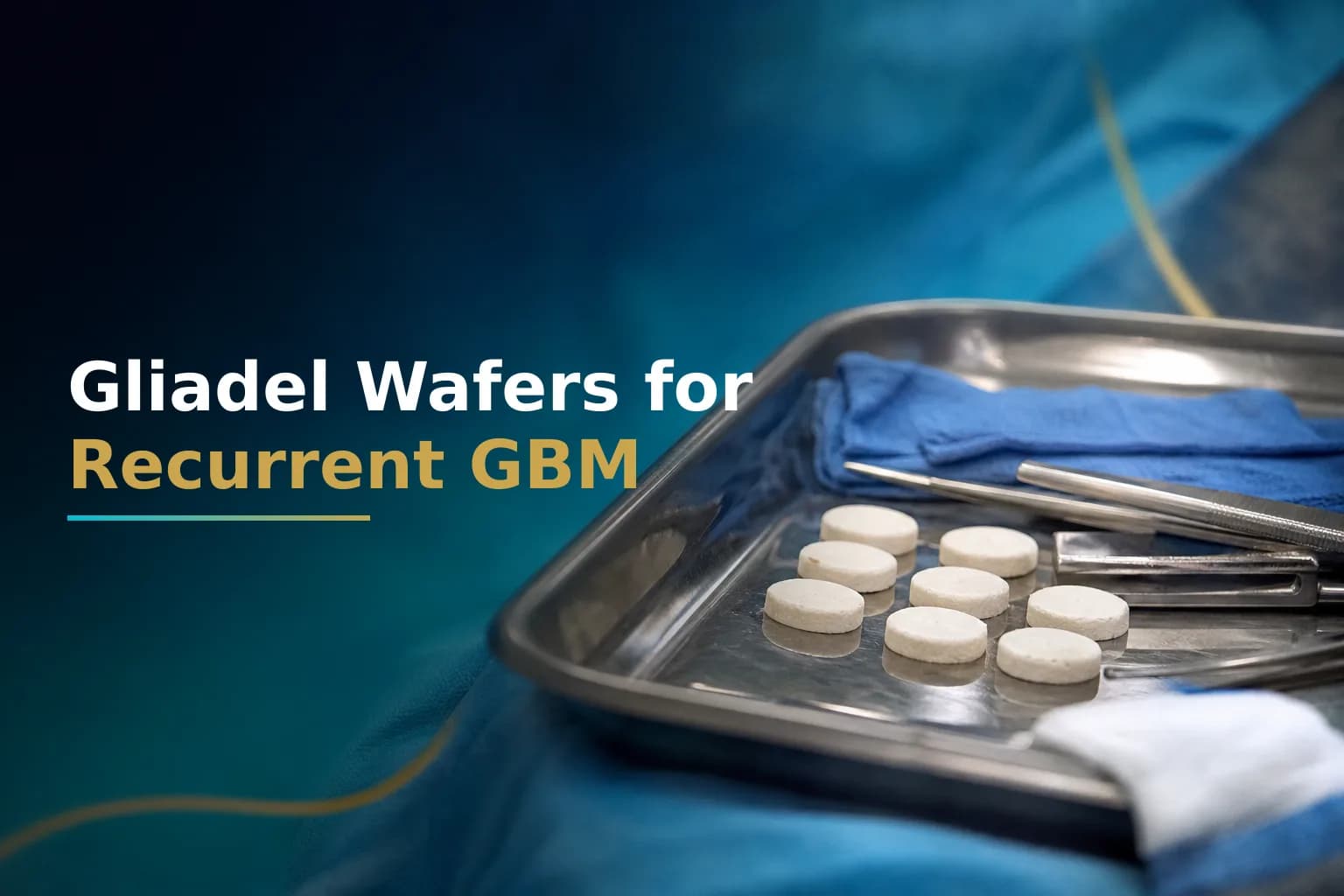
Gliadel Wafers vs Systemic Therapy in Recurrent GBM
When glioblastoma comes back after standard treatment, deciding what to try next is one of the hardest questions a patient and their family will face. Gliadel wafers are small discs that contain the chemotherapy drug carmustine (BCNU). They're made of material that breaks down over time. A surgeon places them directly in the cavity when removing a recurrent tumor. But not all patients can have surgery. Other options include bevacizumab, oral chemotherapy, and radiation therapy. This article explains how Gliadel wafers work, what evidence supports them for recurrent glioblastoma, and how they compare to other salvage options.
What are Gliadel wafers and how do they work?
Carmustine - also called BCNU - is a type of chemotherapy drug. It stops cancer cells from dividing by damaging their DNA. When carmustine is given through an IV, it can harm the bone marrow and damage the lungs with repeated use.
Gliadel wafers put the drug directly into the area where the tumor was removed. Each wafer is a small disc made from material that slowly breaks down. The surgeon places up to eight wafers around the cavity where the tumor was removed. Over two to three weeks, the material breaks down and releases the drug into the brain tissue around the cavity. The drug reaches much higher levels locally than it could through an IV.
The FDA approved Gliadel wafers in 1996 for patients whose glioblastoma came back. The approval was based on a clinical trial. In 2003, the FDA also approved them for newly diagnosed glioblastoma, to be used with radiation therapy. The current FDA prescribing information is available through DailyMed.
How do Gliadel wafers compare to bevacizumab and re-irradiation for recurrent GBM?
| Factor | Gliadel Wafers (BCNU) | Bevacizumab | Re-Irradiation |
|---|---|---|---|
| How it is given | Implanted into the surgical cavity at re-resection; no ongoing infusions after surgery | Intravenous infusion every 2 weeks; outpatient | External beam radiation (SRS, FSRT, or hypofractionated) delivered over days to weeks |
| Requires surgery? | Yes - only an option if re-resection is planned | No | No surgery required |
| FDA approval for recurrent GBM | Yes - approved 1996 for recurrent malignant glioma | Yes - approved 2009 for recurrent GBM | Off-label; widely used at specialist centers |
| Who typically qualifies | Single, accessible supratentorial tumor; KPS 60 or above; adequate organ function; tumor not adjacent to critical brain structures | Measurable recurrent disease; no recent major surgery or significant active bleeding risk | Prior radiation dose and field allow re-treatment; adequate interval since last radiation; controlled tumor size |
| Key risks | Brain swelling, delayed wound healing, fluid leakage, infection, cyst formation, seizures | High blood pressure, blood clots, wound complications, fatigue, changes on MRI that mask true progression | Tissue damage, fatigue, neurological changes; risk increases with shorter interval since prior radiation |
| Typical use pattern | Placed at re-resection; followed by systemic therapy or other options after surgical healing | Given continuously until progression or unacceptable side effects; often combined with re-irradiation | Often combined with bevacizumab or systemic chemotherapy; sequencing varies by center |
The most important practical difference is that Gliadel wafers are only an option if the surgical team has already decided to operate. Bevacizumab and re-irradiation can be offered without surgery, making them available to more patients. When re-resection is planned, wafers add locoregional chemotherapy to the procedure without the systemic side effects of IV treatment. But the evidence of benefit specifically at recurrence is more modest than the wafers' record in newly diagnosed disease.
What does the evidence actually show for recurrent GBM?
The 1996 FDA approval for recurrent glioblastoma was based on a clinical trial that found a survival benefit for patients who received Gliadel wafers at re-resection compared with placebo. That was an important result at the time, and the approval has held.
Later research tells a more mixed story. A meta-analysis on the role of BCNU wafers in high-grade glioma found a survival benefit in patients with newly diagnosed disease, but the evidence in the recurrent disease setting was less consistent across studies. A separate study measuring carmustine concentrations in the tumor cavity after wafer placement found a key physical limit: the drug spreads only a short distance into surrounding brain tissue. Glioblastoma cells often spread several centimeters beyond what doctors can see, often beyond where the drug reaches effective levels.
A 2025 review of Gliadel wafer limitations and next-generation local delivery systems described three main reasons the wafers have not changed the overall outlook for glioblastoma: drug resistance, limited drug spread, and device-related side effects. This does not mean wafers have no role. It means they work best as one part of a broader plan, not as a single answer.
For patients weighing all the recurrence options, the Glioblastoma Center guide to recurrent GBM salvage options puts Gliadel wafers in that broader context with other available approaches.
Who is a candidate for Gliadel wafers at recurrence?
The decision starts with whether surgery is appropriate. Clinical trial criteria and FDA labeling agree on a consistent set of patient characteristics that most centers use as a starting framework:
- A single, surgically accessible tumor in the cerebral hemispheres - above the tentorium
- A Karnofsky Performance Status (KPS) of at least 60 - a functional scale where 100 is fully normal and 60 means the patient needs occasional assistance but can manage most personal care
- Adequate blood counts and organ function before surgery
- Tumor not adjacent to areas controlling speech, movement, or vision where surgery would cause serious problems
- Life expectancy judged to exceed approximately 12 weeks
Doctors have reported problems when wafers are placed near the parts of the brain that control speech or movement. These areas can be damaged by the drug. The safest use is for tumors in brain areas that control less important functions, where normal tissue can buffer the drug spread.
Patients who had Gliadel wafers placed during initial surgery face special challenges. Scar tissue from the first surgery makes a second surgery harder. Combining prior local radiation with prior local carmustine, then adding radiation therapy later, can increase the risk of tissue damage.
What are the specific risks of Gliadel wafers?
Placing the drug locally avoids many side effects of IV chemotherapy, but it causes other problems related to drug release inside the skull.
Brain swelling is the most common serious complication. The FDA prescribing information reports brain swelling in about 23% of newly diagnosed patients treated with Gliadel wafers in the main study. Doctors treat this with steroids. Sometimes it's severe enough to need another surgery.
Wound problems are the second major concern. These include slow healing, the incision reopening, fluid collections, and infections. The surgical team will watch closely for these complications in the weeks after implantation.
Fluid leakage from around the brain happened in 5% of patients who got wafers, compared to less than 1% with placebo in the main study. A leak can lead to infection and let the drug spread where it shouldn't.
Seizures happen more often right after surgery. Patients usually take anti-seizure medicine before and after Gliadel wafer placement. You can read more about seizures in the Glioblastoma Center article on seizures, medication, and safety.
How does systemic chemotherapy compare?
For patients who cannot have surgery, or whose tumor is in multiple locations or in an area that cannot be operated on, IV chemotherapy remains the main medical option. Several drugs have evidence for recurrent glioblastoma:
- Bevacizumab is a drug that stops new blood vessels from growing in tumors. The FDA approved it for recurrent glioblastoma. It can reduce brain swelling and help patients feel better, but large studies haven't shown it always helps patients live longer.
- Lomustine (CCNU) is a pill that works like carmustine. Doctors use it often for recurrent glioblastoma, especially in Europe. Researchers are testing it with newer drugs.
- Temozolomide re-challenge may be considered for patients whose tumors have a certain marker (MGMT methylation) and who haven't had treatment for six months or more. The MGMT marker helps doctors decide if this is a good choice.
The main advantage of systemic therapy is that it doesn't need surgery. IV drugs can reach cancer cells beyond where the surgeon operated. Gliadel wafers cannot reach those distant cells. But systemic chemotherapy causes side effects throughout the body, like low blood counts, tiredness, and nausea. No study has directly compared Gliadel wafers to bevacizumab or lomustine for recurrent glioblastoma. Most of the evidence comes from observation rather than trials. That's why it helps to talk to a specialist.
Where does re-irradiation fit?
Radiation therapy can target the recurrence with focused techniques that don't need surgery. Doctors often combine it with bevacizumab to reduce swelling and tissue damage. For a detailed breakdown of radiation approaches at recurrence, the Glioblastoma Center article on re-irradiation for recurrent GBM compares the different methods and their eligibility criteria.
A major concern is cumulative damage to tissue that has already been treated. The area with the most drug exposure usually also had the most radiation initially. A second course of radiation raises the risk of tissue damage that looks like tumor growth on MRI. Advanced imaging helps doctors tell the difference between tissue damage and real tumor growth.
A review of treatment options for recurrent high-grade gliomas outlines where each method fits in clinical practice and how they are typically sequenced, noting that no single salvage approach works clearly better for all patients.
Can Gliadel wafers be combined with other treatments?
Researchers have tested Gliadel wafers with chemotherapy and radiation for newly diagnosed glioblastoma. Some centers use this combination, but others worry about too much damage at the surgery site.
At recurrence, wafers are usually followed by IV chemotherapy or radiation therapy after healing (usually four to six weeks later). Doctors usually use wafers at surgery, then give IV chemotherapy afterward. But we don't have strong evidence for this sequence.
Deciding between surgery with wafers or IV chemotherapy is a big choice. It helps to get input from more than one doctor. If your current doctors don't specialize in recurrent glioblastoma, it can help to get a second opinion from someone who does.
Questions to ask your neuro-oncology team
- Is my tumor in a place where surgery would be safe and would help?
- Has my tumor's genetic profile been tested to help plan treatment after surgery?
- What's the risk of brain swelling or wound problems based on my past treatment and tumor location?
- Would radiation therapy before or after wafers be an option, and how would you watch for tissue damage?
- Are there clinical trials I should consider before deciding on surgery?
- If surgery isn't recommended, which IV chemotherapy would you use first? Does my tumor's genetic profile change that?
When to talk to your doctor
Talk to your neuro-oncology team as soon as imaging shows the tumor is growing. Ask whether imaging shows one tumor that can be operated on or multiple tumors. This is the first step in deciding if wafers make sense. If your current doctors don't have much experience with surgery for recurrent glioblastoma, ask for a referral to a specialist center before making any final decisions.
This article is for general information and is not a substitute for medical advice. Always consult your oncologist or care team about your specific situation.