Cannabinoids in Glioblastoma: What Clinical Trials Show
Cannabinoids kill glioblastoma cells in lab studies, and early-phase human trials show promising results. But doctors have not proven they work in patients yet. No regulator has approved any cannabinoid as a GBM treatment. Multiple phase II trials are enrolling now - including the ARISTOCRAT trial in the UK - and results in the next two to three years will show whether lab results help patients.
Can cannabinoids treat glioblastoma?
Cannabinoid compounds including THC and CBD kill tumor cells in laboratory glioblastoma models, but human clinical evidence is still early. A 27-patient pilot trial suggested nabiximols with temozolomide may extend survival in recurrent GBM. Several phase II trials are now enrolling. No regulator has approved cannabinoids as a GBM treatment as of mid-2026.
What are cannabinoids and how might they affect GBM?
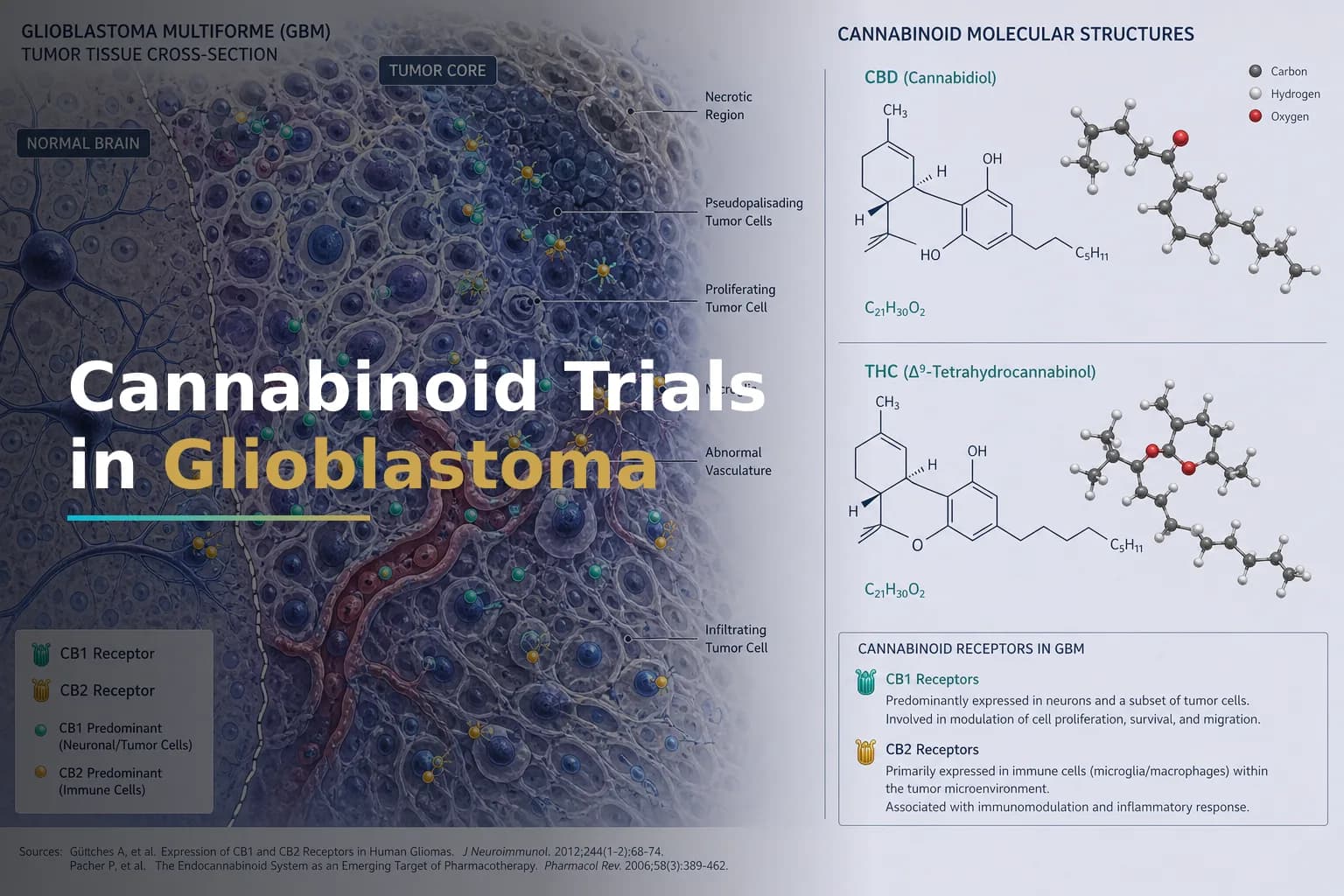
Cannabinoids are chemical compounds that act on receptors called CB1 and CB2 in the body and brain. The two most-studied in oncology are delta-9-tetrahydrocannabinol (THC) - the psychoactive compound in cannabis - and cannabidiol (CBD), which does not cause a high. Nabiximols, sold under the brand name Sativex, is a standardized 1:1 THC:CBD spray from the cannabis plant, made under pharmaceutical conditions.
Glioblastoma cells carry unusually high levels of CB1 and CB2 receptors. In lab studies, cannabinoids appear to trigger several anti-tumor processes: they may cause glioma cells to self-destruct, block blood vessel growth that feeds the tumor, and stop cell migration. A 2025 systematic review covering 45 research articles published between 2022 and 2025 found that cannabinoids also activate autophagy - a cellular cleanup mechanism - trigger oxidative stress in tumor cells, and may change the immune environment in ways that reduce the tumor's ability to hide from the immune system.
How strong is the preclinical evidence?
In cell cultures and animal models, results look good. THC, CBD, and combinations of both reduce glioma cell viability and slow tumor growth. When combined with temozolomide - the standard GBM chemotherapy - cannabinoids appear to produce additive or synergistic anti-tumor effects in some preclinical models. The combination of CBD specifically with temozolomide has shown particular promise in lab systems, which helped guide the ARISTOCRAT trial design.
The jump from a petri dish to a patient is big. Many compounds that destroy cancer cells in a lab never succeed in human trials - because of poor brain penetration, toxicity at effective doses, or the fundamental biological differences between mouse tumor models and human GBM. The National Cancer Institute's Cannabis and Cannabinoids summary notes that while lab studies suggest cannabinoids may slow growth and reduce spread of some cancer cell types, doctors have not yet confirmed these effects convincingly in humans.
What human clinical trials exist for cannabinoids in GBM?
Human data specific to glioblastoma is limited but growing. Here is what trials have found so far.
A phase I/II pilot trial tested nabiximols combined with temozolomide in 27 patients with recurrent GBM. Patients tolerated the combination well. Patients in the nabiximols group had a higher one-year survival rate than those on placebo, and median survival was longer in the active treatment group. These are genuine signals - but a 27-patient pilot is not proof the drug works. A systematic review examining cannabis and its derivatives in adults with malignant CNS tumors found low- to moderate-quality evidence for potential benefit, while also flagging a signal of higher death risk in some patient groups. That mixed picture is exactly why larger, controlled trials are needed before patients draw clinical conclusions.
The largest ongoing study is the ARISTOCRAT trial - a randomised, double-blind, placebo-controlled phase II study led by Professor Susan Short at the University of Leeds and coordinated by the Cancer Research UK Clinical Trials Unit at the University of Birmingham. ARISTOCRAT is testing nabiximols plus temozolomide against placebo plus temozolomide in patients with MGMT-methylated recurrent GBM at first recurrence. The trial aims to recruit more than 230 patients across NHS hospitals in England, Scotland, and Wales. The MGMT-methylated enrollment criterion matters: the trial specifically targets patients whose tumor biology makes them more likely to respond to temozolomide, which is combined with nabiximols. Results from ARISTOCRAT will not automatically apply to MGMT-unmethylated patients.
In Spain, the GEINO group is running a phase I trial testing a 1:1 THC:CBD extract in recurrent GBM patients, with primary endpoints of safety and dose tolerability. A separate completed trial (NCT03529448) tested a THC+CBD combination (TN-TC11G) alongside the standard Stupp protocol of temozolomide and radiotherapy in newly diagnosed GBM; peer-reviewed results from that study are not yet published.
One US trial (NCT05753007) takes a different approach: it is testing a hemp-derived, high-CBD product for anxiety, pain, and quality of life in newly diagnosed GBM patients - not as an anti-tumor treatment but as supportive care alongside standard treatment. This distinction matters. CBD's most evidence-supported near-term role in GBM may be symptom management rather than direct tumor control.
Can cannabinoids help manage symptoms during GBM treatment?
The evidence for symptom management is stronger than the anti-tumor evidence. Cannabinoids have a recognized role in oncology for chemotherapy-induced nausea. Anxiety, sleep disruption, and pain are all common during GBM treatment and chemoradiation cycles, and CBD has been studied for each of these.
If you are considering options for sleep disruption during steroid use or chemotherapy, talk with your oncologist about this separately from the larger question of cannabinoids as an anti-tumor strategy. For supportive options that may complement those conversations, ask your oncologist about CBD products. Tell your oncology team about any supplement, particularly if you are on anti-epileptic drugs, where drug interactions are a real concern.
Is medical cannabis legal in your country?
This is one of the most practical questions caregivers ask, and the answer varies substantially. Laws also change - verify locally with a pharmacist or legal adviser before attempting to source any cannabinoid product.
How does medical cannabis access compare across key regions?
| Region | Medical Cannabis Legal Status | Practical GBM Access |
|---|---|---|
| United Kingdom | Legal since 2018; specialist doctors may prescribe cannabis-based medicines | Nabiximols available by specialist prescription; ARISTOCRAT trial open at NHS sites |
| United States | Varies by state; THC is federally Schedule I; FDA-approved CBD (Epidiolex) for epilepsy only | Dispensary access in legal states; cannabinoid GBM trials open at select academic centers |
| Australia / Canada | Legal with oncologist prescription (TGA or Health Canada pathways) | Prescribing oncologist can facilitate access; approved pathways exist for cancer patients |
| India | Regulated under NDPS Act 1985; hemp-derived CBD in a regulatory gray zone | No standard approved pathway for cancer; state-level exceptions exist in principle but are difficult to access in practice |
| UAE / Saudi Arabia / GCC | Illegal; strict enforcement; UAE 2025 industrial hemp decree covers industrial hemp only - not therapeutic cannabis for cancer patients | No legal patient access; importation carries severe criminal penalties |
| Nigeria / Kenya / Sub-Saharan Africa | Generally illegal; reform discussions ongoing in some countries | No approved medical access for cancer patients in most jurisdictions |
Patients in the UK, Australia, and Canada have clearer, physician-led pathways to cannabinoid medicines than patients in most other regions. For families in the GCC, most of Africa, and South Asia, legal barriers are significant or total. Traveling to a country where medical cannabis is accessible does not create any legal right to bring it home across a border where it is prohibited - and in the UAE and Saudi Arabia, consequences for possession are severe.
What should you ask your oncologist before considering cannabinoids?
Before using any cannabinoid product, bring these questions to your neuro-oncologist:
- Does my MGMT methylation status affect whether nabiximols combined with temozolomide might be relevant to my case?
- Am I eligible for the ARISTOCRAT trial or another enrolling cannabinoid study in my country?
- Are there drug interactions between CBD or THC and my current medications - particularly anti-seizure drugs and dexamethasone?
- If I am interested in CBD specifically for anxiety or sleep, what products are least likely to interfere with my treatment regimen?
- Will disclosing prior cannabinoid use affect my eligibility for other clinical trials I might want to join?
If you are weighing enrollment in a cannabinoid trial, the article on evaluating a glioblastoma clinical trial before you enroll covers eligibility criteria, how to assess phase and endpoints, and the right questions to bring to the trial team. For patients at recurrence who are mapping all investigational options, the article on repurposed drugs for glioblastoma places cannabinoids alongside other off-label and investigational agents currently under study.
Where do cannabinoids fit in a broader GBM treatment strategy?
Cannabinoids are not a replacement for the Stupp protocol, tumor treating fields, or any established component of GBM treatment. They are an area of active investigation with a genuine preclinical rationale and a small but growing clinical evidence base. For most patients right now, the practical question is either: am I eligible for a trial, or can I access a cannabinoid product legally to manage symptoms alongside standard treatment?
Because the evidence is still developing, how cannabinoids might interact with your specific molecular profile - your MGMT status, IDH status, treatment history, and current drug regimen - matters considerably. If you have received a recurrence diagnosis and want help mapping what investigational options are realistically available, ask your neuro-oncologist about your options; your oncologist can review your molecular profile and treatment history to clarify where trials and non-standard approaches are genuinely accessible.
When to talk to your doctor
Tell your neuro-oncologist before using any cannabinoid product - including over-the-counter CBD oil. CBD is broken down by liver enzymes (CYP3A4 and CYP2C19) that also process many cancer drugs and anti-epileptic medications. In patients taking clobazam (a common seizure medication in GBM), CBD has been shown in studies to raise drug blood levels measurably. If you are considering trial enrollment, raise it before your next treatment cycle begins, since prior cannabinoid use can affect eligibility criteria in some studies. If you would like a structured review of your case before changing any part of your treatment, ask your doctor about remote team review options for your MRI and pathology reports.
This article is for general information and is not a substitute for medical advice. Always consult your oncologist or care team about your specific situation.